Whiplash is one of the most common injuries people report after a car accident, especially after a rear-end collision. It can happen when the head and neck are suddenly forced backward and forward, causing strain to the muscles, ligaments, discs, nerves, or soft tissues in the neck and upper back.
At first, whiplash may seem minor. Some people feel sore for a few days and recover quickly. Others deal with pain, stiffness, headaches, limited movement, nerve symptoms, missed work, therapy, and ongoing medical bills.
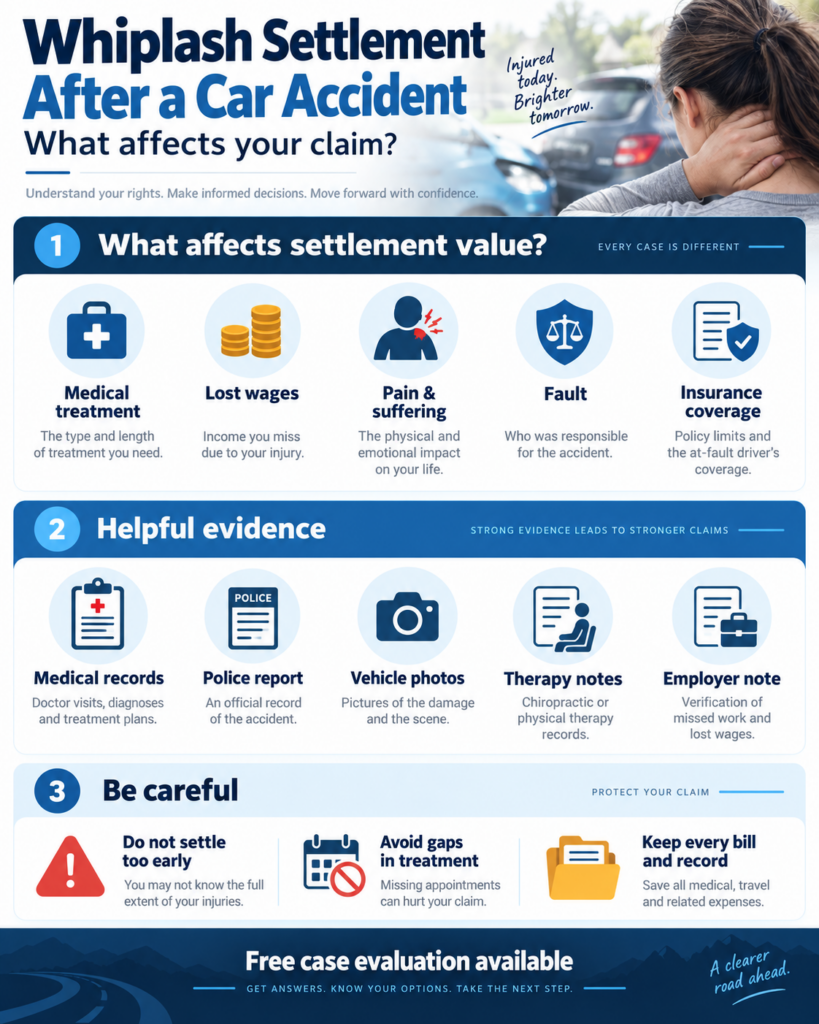
Because symptoms and recovery can vary so much, there is no single whiplash settlement amount that applies to every case. A whiplash settlement depends on the severity of the injury, medical documentation, treatment history, fault, insurance coverage, lost income, and how the injury affects daily life.
If you were injured in a crash and are unsure whether your whiplash claim may qualify, you can request a free case evaluation.
What Is a Whiplash Settlement?
A whiplash settlement is compensation that may resolve an injury claim involving neck strain, soft tissue damage, or related symptoms after a crash. In many cases, the settlement is paid by an insurance company after liability, injuries, medical treatment, and damages are reviewed.
A settlement may include medical expenses, future care, physical therapy, lost wages, pain and suffering, out-of-pocket costs, and other accident-related losses.
The settlement is not based only on the word “whiplash.” Insurance companies usually look at the evidence behind the injury. They may review medical records, imaging, treatment notes, crash details, vehicle damage, doctor recommendations, work restrictions, and whether symptoms were reported consistently.
For a broader explanation of settlement value, review car accident settlement amounts.
Why Whiplash Claims Are Often Disputed
Insurance companies often challenge whiplash claims because the injury may not be easy to see from the outside. Unlike a broken bone, whiplash may involve soft tissue damage, pain, stiffness, headaches, or limited movement that does not always appear clearly on basic imaging.
The insurance company may argue that the crash was too minor, the vehicle damage was limited, your symptoms were delayed, your treatment was too long, or your pain came from a pre-existing condition.
That does not mean the injury is not real. It means documentation matters. Medical records, consistent treatment, clear symptom reporting, and evidence of how the injury affects your life can make the claim stronger.
If the insurance company is already pushing back, review why insurance adjusters undervalue your claim.
What Affects a Whiplash Settlement Amount?
Several factors can affect a whiplash settlement.
The first factor is injury severity. A short period of soreness is usually evaluated differently from ongoing neck pain, limited range of motion, nerve symptoms, headaches, disc involvement, or long-term treatment.
The second factor is medical care. Emergency visits, doctor exams, physical therapy, chiropractic care, medication, imaging, specialist referrals, pain management, and follow-up treatment can all help document the injury.
The third factor is consistency. If you report symptoms early, follow medical instructions, attend appointments, and explain limitations clearly, the claim is usually easier to support. If there are long gaps in treatment, the insurer may argue that the injury was not serious.
The fourth factor is fault. A clear rear-end crash, distracted driving evidence, traffic citation, police report, or witness statement can help support liability. If fault is disputed, the settlement may become more difficult.
The fifth factor is insurance coverage. Even a serious injury claim may be limited by available policy limits, uninsured motorist coverage, underinsured motorist coverage, MedPay, PIP, or other coverage sources.
Whiplash After a Rear-End Accident
Rear-end collisions are strongly associated with whiplash claims because the impact can quickly move the head and neck. The injured person may feel neck pain, stiffness, headaches, shoulder pain, upper back pain, dizziness, numbness, tingling, or reduced range of motion.
Fault in a rear-end crash may seem obvious, but insurance companies can still dispute details. They may question whether the front driver stopped suddenly, whether multiple vehicles were involved, or whether the crash was severe enough to cause the symptoms.
For fault and liability guidance, link this new article to rear-end accident claims.
Can a Low-Speed Accident Cause Whiplash?
A low-speed crash may still cause neck and soft tissue injuries. The seriousness of the injury depends on the person, the angle of impact, seat position, headrest position, prior medical history, vehicle movement, and how the body absorbed the force.
Insurance companies often use “minor impact” arguments to reduce whiplash claims. They may point to limited vehicle damage and argue that the injury could not be serious. But vehicle damage alone does not always tell the full medical story.
If symptoms appear after a crash, get checked by a medical professional and follow the recommended care plan.
For more on delayed symptoms, review when minor accidents lead to major injuries.
Medical Treatment and Whiplash Documentation
Medical documentation is one of the strongest parts of a whiplash claim. You should keep records of emergency care, urgent care visits, primary doctor visits, physical therapy, chiropractic treatment, prescriptions, imaging, referrals, specialist evaluations, and follow-up appointments.
Your medical records should clearly connect the symptoms to the accident. They should also show how the injury affects your daily life, movement, sleep, work, driving, childcare, household tasks, and normal activities.
If you delay treatment or miss appointments, the insurance company may argue that your injury was not caused by the crash or was not serious enough to justify compensation.
If you are dealing with bills from treatment, review who pays medical bills after a car accident.
Lost Wages and Daily Life Impact
A whiplash injury can affect more than medical bills. Some people miss work because they cannot sit, drive, lift, type, turn their head, sleep normally, or perform job duties without pain.
Lost wages may become part of the claim if the injury caused missed work, reduced hours, unpaid leave, or work restrictions. Helpful documents include pay stubs, employer letters, doctor notes, time-off records, tax records, and written work restrictions.
Daily life impact also matters. Pain while driving, difficulty sleeping, headaches, limited movement, reduced exercise, childcare difficulty, and emotional stress can all affect the value of the claim when properly documented.
For more on wage documentation, review lost wages after an accident.
Pain and Suffering in a Whiplash Claim
Pain and suffering can be an important part of a whiplash settlement. This may include physical discomfort, stiffness, headaches, sleep problems, anxiety, frustration, reduced mobility, and loss of normal activities.
Because pain and suffering is harder to measure than a bill, documentation becomes important. Medical notes, therapy records, medication records, pain journals, witness statements, and daily activity limitations can all help show the real impact of the injury.
Avoid exaggerating, but do not minimize your symptoms either. Be specific and consistent when explaining pain, movement limits, and how the injury affects your life.
What Evidence Helps a Whiplash Settlement?
Helpful evidence may include photos of vehicle damage, crash-scene photos, police reports, witness statements, dashcam footage, traffic camera footage, medical records, bills, repair estimates, insurance letters, employer notes, and a pain journal.
If the other driver was cited or clearly at fault, that may help the claim. If the crash involved a rear-end impact, distracted driving, speeding, or a chain reaction, document those facts carefully.
Keep all communication with the insurance company. Save emails, letters, claim numbers, adjuster names, recorded statement requests, settlement offers, and release forms.
For accident evidence guidance, review what evidence helps the most in a car accident claim.
Should You Accept a Quick Whiplash Settlement Offer?
Be careful with quick settlement offers. Insurance companies may make an early offer before your symptoms are fully understood.
That can be risky because whiplash symptoms may change over time. You may need therapy, imaging, specialist care, pain management, or additional follow-up. If you settle too early, future medical costs and ongoing symptoms may not be included.
Before accepting an offer, ask whether your treatment is complete, whether all medical bills are included, whether lost wages are documented, whether pain and suffering is considered, and whether the release affects any future rights.
For more on early offers, review the hidden dangers of quick insurance settlements.
When Whiplash Is Not Minor
Some whiplash injuries improve quickly. Others lead to long-term pain, headaches, nerve symptoms, limited range of motion, or ongoing treatment needs.
If symptoms continue, worsen, or interfere with daily life, do not ignore them. Follow up with your doctor, attend recommended therapy, and document the changes.
Because the site already has a strong support article on this specific angle, internally link to when whiplash is not minor.
When to Request a Free Case Evaluation
You should consider a free case evaluation if you have neck pain after a crash, symptoms are getting worse, medical bills are increasing, you missed work, the insurance company says the crash was too minor, or the settlement offer seems low.
You may also want help if the crash involved a rear-end collision, disputed fault, uninsured drivers, multiple vehicles, delayed symptoms, or long-term treatment.
Start here: Get a Free Case Evaluation.

Conclusion
A whiplash settlement after a car accident depends on medical documentation, injury severity, treatment consistency, fault, insurance coverage, lost wages, and how the injury affects your life.
Do not assume whiplash is too minor to matter. Also do not assume the insurance company’s first offer reflects the full value of your claim. Get medical care, keep records, document your symptoms, and be careful before signing a settlement release.
If you were injured and are unsure what your whiplash claim may be worth, request a free case evaluation to better understand your next step.
FAQ Section
What is a whiplash settlement?
A whiplash settlement is compensation that may resolve an injury claim involving neck strain, soft tissue damage, pain, stiffness, headaches, or related symptoms after a car accident.
What affects a whiplash settlement amount?
A whiplash settlement may depend on injury severity, medical records, treatment length, lost wages, fault, insurance coverage, pain and suffering, and whether symptoms affect daily life.
Can a low-speed car accident cause whiplash?
Yes, a low-speed crash may still cause whiplash or soft tissue injuries depending on the impact, body position, headrest position, vehicle movement, and the person’s medical history.
Should I accept the first whiplash settlement offer?
Be careful before accepting the first offer. Early offers may not include future treatment, ongoing pain, lost wages, therapy, or symptoms that become worse later.
What evidence helps a whiplash claim?
Helpful evidence may include medical records, bills, photos of vehicle damage, police reports, witness statements, therapy notes, prescriptions, pain journals, employer letters, and insurance communications.
When should I get a free case evaluation for whiplash?
You should consider a free case evaluation if symptoms continue, medical bills are increasing, fault is disputed, you missed work, or the insurance company says the crash was too minor to cause injury.