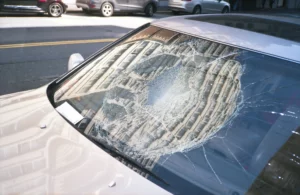
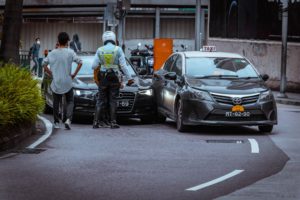
When two drivers give completely different versions of how a collision occurred, video can sometimes answer questions that photographs and statements cannot.
Did one vehicle enter the intersection on a red light? Did a driver make an unsafe left turn? Was traffic already stopped before a rear-end collision? Did a vehicle change lanes immediately before impact?
A traffic camera positioned near the crash may have captured some or all of those events.
But finding a camera does not automatically mean there is a recording available. Some transportation cameras provide live traffic monitoring without maintaining historical footage. Others record video temporarily, and some agencies have formal procedures for requesting copies.
If you need to request traffic camera footage after a car accident, the most important factor is usually speed. You first need to identify who owns the camera, determine whether footage was recorded, and take appropriate steps to request or preserve it before the applicable retention period expires.
At Help4Accidents, we help accident victims understand how video, digital records, witnesses, vehicle information, and other evidence can be used to investigate what caused a crash.
Traffic Cameras Can Provide Powerful Accident Evidence
Video can provide an objective view of events that happened in only a few seconds.
Depending on the camera angle and image quality, traffic footage may show:
- Vehicle positions before impact
- Which direction each vehicle was traveling
- Traffic signal conditions
- Lane changes
- Turning movements
- Approximate traffic flow
- Pedestrian movements
- Whether vehicles stopped before entering an intersection
- The sequence of a multi-vehicle collision
- Post-crash vehicle locations
- Weather or road conditions
- Other potential witnesses or vehicles
A recording may therefore help resolve a disputed version of events.
However, camera footage should normally be considered alongside the rest of the evidence that helps most in a car accident claim rather than treated as the only evidence that matters.
First Determine What Type of Camera You Found
Not every camera mounted near a roadway serves the same purpose.
The camera you see may be:
- A transportation-management camera
- A red-light enforcement camera
- A speed enforcement camera
- A city intersection camera
- A police surveillance camera
- A tolling camera
- A license-plate recognition system
- A private business surveillance camera
- A residential security camera
- A transit agency camera
Determining the type of camera is important because it helps identify who controls the footage and whether historical recordings are likely to exist.
A state transportation department may own a highway-monitoring camera, while a municipality may control an intersection system only a few blocks away.
Not Every Traffic Camera Records Video
This is one of the most important misconceptions about traffic camera evidence.
Seeing a live traffic camera online does not necessarily mean the government is maintaining an archive of everything that camera sees.
FHWA research into transportation-management centers found substantial variation in recording policies. Some agencies record traffic-management video, while others generally do not record or archive CCTV except for particular operational, security, research, or traffic-analysis purposes.
That means your first question should not simply be:
“Where do I request the video?”
It should be:
“Was this particular camera recording at the time of my accident, and is that recording still retained?”
Identify the Exact Crash Location and Time
A vague request makes locating footage much harder.
Before contacting the agency, establish the collision information as precisely as possible:
- Exact intersection or roadway
- Direction of travel
- Nearest cross street
- Date of the accident
- Approximate crash time
- Police incident or report number
- Vehicle descriptions
- Specific camera when identifiable
The police report, photographs, 911 timeline, phone records, dashcam data, and other timestamps may help narrow the time.
Requesting a reasonable period immediately before and after the collision may capture both the accident itself and the events leading to it.
Our article explaining how 911 audio can help a car accident claim discusses another source that may help establish an accurate accident timeline.
Find Out Who Owns the Camera
Camera ownership may not be obvious from looking at the equipment.
Possible operators include:
- State Department of Transportation
- County transportation department
- City traffic engineering department
- Police department
- Toll authority
- Transit agency
- University or public institution
- Private business
- Homeowner
- Property-management company
Start by identifying the roadway jurisdiction.
A camera along an interstate or major state highway may belong to the state DOT. A camera at a city intersection may instead belong to the municipal transportation department or law-enforcement agency.
Some state transportation departments provide public camera maps that can help identify equipment. For example, New York State DOT operates CCTV along certain state roadways through its Intelligent Transportation Systems program.
Can You Request Traffic Camera Video From the Government?
Potentially, yes.
The process varies by jurisdiction and agency. Some departments have dedicated traffic-video request procedures, while others route requests through state public-records laws.
For example, the Ohio Department of Transportation currently provides a specific Traffic Management Center video request process for traffic-camera footage, and Iowa DOT similarly provides a camera-video request form.
Other agencies may require a Freedom of Information Act, Freedom of Information Law, Open Records, Public Records, or similar state-law request.
For example, NYC DOT accepts requests for agency records through New York’s Freedom of Information Law process.
The terminology differs, but the concept is similar: you submit a sufficiently specific request asking the government agency for an existing record.
Submit the Request Quickly
Traffic footage can be extremely time-sensitive.
Do not assume the video will remain stored until the insurance claim is finished.
Retention periods depend on the camera system and agency. One particularly useful example comes from Chicago DOT, which states that requests involving speed and red-light camera video can include up to one hour of streaming footage when requested within 30 days of the incident. That deadline is Chicago-specific, not a nationwide rule, but it demonstrates why waiting can be dangerous.
Another agency might retain footage longer, shorter, or not at all.
The safest practical approach is to investigate camera evidence immediately.
Request Preservation Even If You Cannot Obtain the Video Yet
Sometimes you may learn that footage exists but cannot obtain a copy immediately.
For example, an agency may require:
- A formal records request
- Identity verification
- Payment of a copying fee
- Legal authorization
- Additional accident information
- Review for confidential information
- A subpoena
- A court order
If potentially important footage is at risk of routine deletion, a written preservation request may be appropriate while the procedure for obtaining the recording is determined.
The notice should clearly identify the crash, camera, date, approximate time, location, and relevant recording period.
Our guide explaining what a spoliation letter is in a car accident case explains why potentially important electronic evidence should be identified before routine deletion or destruction occurs.
A Public Records Request Is Not the Same as a Preservation Request
These two steps serve different purposes.
A public records request asks an agency to provide an existing government record when disclosure is available under applicable law.
A preservation request asks the evidence holder not to erase or destroy potentially relevant information.
You may sometimes need both.
Requesting a video does not necessarily guarantee that an automated deletion system will stop while the request is processed. When the recording may be critical evidence, specifically asking about preservation and retention can reduce uncertainty.
What Should the Traffic Camera Request Include?
Provide enough information for the agency to locate the recording without forcing employees to guess which camera or incident you mean.
A useful request generally identifies:
Accident date: August 10, 2026
Approximate time: 2:35 p.m.
Location: Main Street and First Avenue
Requested period: approximately 2:25 p.m. through 2:45 p.m.
Camera: northeast intersection traffic camera, if known
Incident number: police report or CAD number
Requested record: available video or images from the identified camera
Those details are illustrative. Use the actual crash information and follow the agency’s required procedure.
Avoid asking for months of unrelated recordings when a narrow time period will capture the event.
What If the Government Says the Camera Was Live Only?
You may discover that the camera displayed traffic conditions but did not record them.
That does not end the investigation.
Look for other cameras nearby, including:
- Gas stations
- Restaurants
- Banks
- Convenience stores
- Apartment buildings
- Parking garages
- Hotels
- Office buildings
- Homes with doorbell cameras
- Dashcams from nearby motorists
- Public buses
- Commercial trucks
- Police vehicles
Walk or photograph the surrounding area as soon as possible.
A business camera pointing toward an intersection may ultimately be more valuable than the government traffic camera you first noticed.
Private Surveillance Video Requires a Different Approach
A business or homeowner is not generally subject to the same public-records request procedure used for government records.
You can ask the property owner to preserve and voluntarily provide relevant footage. If cooperation is not possible and litigation begins, formal discovery or subpoena procedures may potentially be used when appropriate under applicable law.
The most important immediate step is identifying the camera and notifying the owner before the recording is automatically overwritten.
Do not enter private systems, accounts, or property without permission.
Traffic Camera Footage May Show the Signal—but Not Always
One of the most valuable uses of intersection footage is determining who had the right of way.
But camera position matters.
A recording may show the vehicles clearly while the actual signal head is outside the frame. In that situation, investigators may need other evidence to determine signal timing.
Potential additional evidence may include:
- Traffic signal timing records
- Signal phase data
- Witness observations
- Other camera angles
- Vehicle movements
- Police observations
- Intersection diagrams
Avoid assuming that a vehicle entered on red simply because its movement looks unusual from one camera angle.
Video Can Help Investigate Distracted Driving
Traffic footage may occasionally show a driver looking downward, holding a phone, failing to react to traffic, or drifting before the collision.
On its own, that may not conclusively establish phone use.
But the video can become much stronger when combined with digital evidence.
For example, the recording may establish the exact crash time while phone records show relevant activity during the same period.
Our guide on using cell phone records to prove distracted driving explains how those different forms of evidence can work together.
Video Can Be Compared With Black Box Data
Traffic-camera footage may show how vehicles moved before impact, while an event data recorder may provide technical vehicle information about speed, braking, throttle position, or crash forces.
Together, those sources can provide accident reconstruction professionals with a more complete picture.
For example, video may show a vehicle approaching stopped traffic without visibly slowing, while EDR information may provide technical braking and speed information.
Because damaged vehicles may be repaired or sent to salvage quickly, our guide on how to preserve black box data before it disappears explains why vehicle evidence should be protected at the same time video evidence is being pursued.
Preserve the Original Video File
If you receive footage, keep the original file exactly as supplied.
Avoid:
- Editing the original
- Trimming it
- Recompressing it
- Adding annotations
- Changing the format
- Overwriting the file
- Recording the screen instead of saving the provided file
Make copies for viewing and editing while preserving the original separately.
Also save:
- The agency’s response
- Request confirmation
- File-delivery email
- Camera identification
- Date and time information
- Certification or custodian information when provided
- Any explanation of the recording system
These materials can help establish where the video came from.
Review More Than the Moment of Impact
Do not watch only the second when the vehicles collide.
The footage immediately before the crash may reveal more important information.
Look for:
- Speed changes
- Lane movements
- Following distance
- Brake lights
- Traffic signal cycles
- Pedestrians
- Turning vehicles
- Visibility problems
- Other vehicles that may contain witnesses
- Driver reactions
- Post-impact movement
The moments after impact may also reveal the vehicles’ resting positions and behavior of the people involved.
Does Traffic Camera Video Automatically Prove Fault?
No.
Video can be compelling, but it still requires interpretation.
Camera angle, frame rate, image quality, distance, obstructions, perspective, timestamps, and missing portions can affect what can reasonably be concluded.
A video may appear to show one vehicle traveling faster than another without providing enough information to calculate actual speed.
Likewise, a camera may show a collision but not what happened immediately before it.
The strongest accident analysis generally combines video with physical evidence, witnesses, vehicle records, police documentation, and other reliable information.
What If the Insurance Company Disputes the Video?
Provide the original recording rather than only screenshots or short clips.
Also preserve documentation showing:
- Who supplied the footage
- Which camera recorded it
- When it was obtained
- The complete requested time period
- Whether the agency provided metadata
- Whether the timestamp was verified
- Whether the file was altered
If the recording becomes important to litigation, additional authentication and evidence rules may apply.
The underlying legal requirements vary by jurisdiction.
What If the Footage Was Already Deleted?
Do not assume the case is lost.
Other evidence may still include:
- 911 recordings
- CAD records
- Police reports
- Dashcam footage
- Cell phone records
- Vehicle EDR data
- Witness testimony
- Private surveillance video
- Photographs
- Traffic signal records
- Vehicle damage
- Accident reconstruction evidence
The key is to move quickly from one potential evidence source to the next rather than relying on a single recording.
Frequently Asked Questions
Can I request traffic camera footage after a car accident?
Potentially. Some government transportation agencies record traffic video and provide procedures for requesting it. Other cameras operate primarily as live feeds and may not retain historical recordings.
How long is traffic camera footage kept?
There is no single nationwide retention period. Storage policies vary by agency and camera system, and some traffic cameras may not archive footage at all. Requests should therefore be made promptly.
Who should I contact for traffic camera footage?
Identify who owns the camera. It may be operated by a state transportation department, city traffic department, county agency, police department, toll authority, or another government entity.
Do traffic cameras always record accidents?
No. Some cameras are used primarily for real-time traffic monitoring and do not continuously archive video.
Can traffic camera footage prove who caused an accident?
It may provide strong evidence of vehicle movements, signal conditions, lane changes, and impact sequence. However, camera angle and image quality may limit what it proves, so it should be considered with other evidence.
Can I obtain video from a private business near the crash?
You may ask the business to preserve and voluntarily provide relevant footage. Formal legal procedures may be required if the business does not voluntarily provide it.
What should I do if the footage may be deleted soon?
Identify the evidence holder and consider sending a written preservation request immediately while also following the appropriate process for obtaining the footage.
Conclusion
You may be able to request traffic camera footage after a car accident, but finding a camera does not guarantee that historical video exists.
Traffic monitoring, red-light enforcement, municipal surveillance, police, tolling, and private security systems all operate differently. Some agencies retain recordings and provide formal request procedures, while other transportation cameras primarily provide live monitoring and maintain little or no archive.
Identify the exact accident time and location, determine who operates each nearby camera, submit a targeted records request, and ask about preservation immediately. Then investigate surrounding businesses and private cameras rather than relying solely on government footage.
This article provides general educational information. Public-records laws, retention periods, privacy rules, subpoena procedures, and access rights vary by jurisdiction.
Get a free case evaluation from Help4Accidents when time-sensitive video or other evidence may help establish what caused your collision.