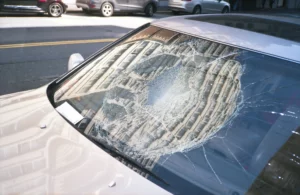
A vehicle involved in a serious collision may contain electronic information about what happened immediately before and during the impact. This information can become important when drivers disagree about speed, braking, seat-belt use, airbag deployment, or the sequence of events leading to the crash.
The device commonly called a vehicle’s “black box” is technically known as an event data recorder, or EDR. Depending on the vehicle and crash, the EDR may contain information about vehicle speed, accelerator position, brake application, changes in velocity, safety-belt status, airbag deployment, and other vehicle-system activity.
However, this evidence should not be taken for granted. A damaged car may be repaired, sold, dismantled, transferred to a salvage facility, or destroyed before anyone downloads its electronic data. The module may also become damaged or inaccessible while the property damage claim is being processed.
To preserve black box data after a car accident, the vehicle must usually be identified, located, protected from alteration, and examined by a properly equipped professional as soon as reasonably possible.
At Help4Accidents, we help accident victims understand how physical, electronic, medical, and witness evidence can affect a collision claim.
What Is a Vehicle Black Box?
A vehicle black box is not generally a separate audio or video recorder like the devices commonly associated with airplanes. Under federal regulations, an EDR is a device or vehicle function that records dynamic data shortly before or during a crash event so the information can later be retrieved.
NHTSA explains that an EDR may record technical vehicle and occupant information for a brief period before, during, and after a collision. It does not ordinarily record conversations or video of the occupants.
The EDR may be integrated into an airbag control module, restraint control module, or another vehicle electronic system. Its exact location, capabilities, and retrieval procedure depend on the manufacturer, model, model year, and vehicle configuration.
Do All Cars Have Black Boxes?
Not every vehicle is guaranteed to have an EDR.
Federal rules establish standardized requirements for certain vehicles when they are equipped with an EDR. The federal regulation applies to specified passenger cars, multipurpose passenger vehicles, light trucks, and buses manufactured on or after September 1, 2012, if those vehicles contain an event data recorder. The rule does not mean every vehicle covered by that date range was required to contain one.
One of the first preservation steps is therefore confirming whether the vehicle may contain retrievable EDR information.
The owner’s manual is a useful starting point. Vehicles covered by the federal regulation must contain a manual disclosure explaining that the vehicle is equipped with an EDR.
What Information Can an EDR Record?
The available information varies by vehicle. Depending on the system and crash event, EDR data may include:
- Vehicle speed before impact
- Accelerator or throttle position
- Brake application
- Change in velocity during the crash
- Driver safety-belt status
- Airbag warning status
- Airbag deployment timing
- The number or timing of recorded events
- Anti-lock brake activity
- Stability-control activity
- Steering input, when recorded
- Engine speed, when recorded
Current federal standards identify required and conditionally required data elements for vehicles covered by the EDR regulation. The information is recorded during limited intervals surrounding a qualifying crash event rather than as a continuous history of normal driving.
An EDR report does not usually state, “Driver A caused the crash.” It supplies technical information that must be evaluated alongside vehicle damage, scene measurements, photographs, witness testimony, video, police documentation, and other evidence.
Our article on what evidence helps the most in a car accident claim explains why the strongest investigations generally combine several independent sources.
How Long Does the Black Box Record?
An EDR does not usually store hours of driving history. NHTSA describes the information as covering a brief period measured in seconds, while the federally required owner-manual disclosure says EDRs record vehicle dynamics and safety-system data for a short period, typically 30 seconds or less.
The actual recording window and data points depend on the vehicle and the standards applicable to it. Some systems retain only a few seconds of pre-crash information, while newer regulatory requirements phase in longer pre-crash recording intervals for certain EDR-equipped vehicles.
The important point is that an EDR provides a limited snapshot. It should not be treated as a complete trip log.
Why Black Box Evidence Can Disappear
The data may become unavailable if the vehicle or electronic module is not preserved properly.
Potential risks include:
- The vehicle being repaired before inspection
- The airbag or restraint module being replaced
- The car being dismantled for parts
- The vehicle being sold through a salvage auction
- The vehicle being destroyed
- The module being physically damaged
- Another event affecting stored information
- Access to the vehicle being lost
- The tow yard or insurer relocating the vehicle
- A repair facility discarding electronic components
A total-loss decision can accelerate this process. Once an insurer takes possession of a vehicle or sends it to a salvage facility, the time available for an independent inspection may become limited.
Review what happens when a car is declared a total loss after an accident before authorizing the vehicle’s sale, destruction, or transfer.
Locate the Vehicle Immediately
The first practical step is determining exactly where the vehicle is located.
It may be at:
- A towing yard
- Police impound
- Repair facility
- Insurance inspection center
- Salvage facility
- Dealership
- Private storage property
- The vehicle owner’s home
Obtain the facility’s name, address, telephone number, contact person, storage or claim number, and written fee schedule. Confirm who currently controls access to the vehicle and whether it is scheduled to be moved, repaired, auctioned, or destroyed.
Do not assume the insurer, tow yard, and repair shop are communicating with one another about evidence preservation.
Our guide explaining who pays towing and storage fees after a car accident covers the separate need to prevent unnecessary storage charges from increasing.
Send a Written Preservation Notice
When black box data may matter, a written preservation notice should identify the vehicle and state that the vehicle, EDR module, electronic data, and related components must not be altered, repaired, erased, replaced, sold, dismantled, or destroyed before an appropriate inspection can occur.
Depending on the circumstances, the notice may need to be sent to:
- The vehicle owner
- The driver
- The insurance company
- The towing company
- The storage facility
- The repair shop
- A salvage company
- An employer or commercial vehicle owner
- A leasing company
- Other parties controlling the vehicle
The letter should identify the collision date, location, involved vehicle, vehicle identification number when available, and the evidence requiring preservation.
Our article explaining what a spoliation letter is in a car accident case provides more detail about notifying evidence holders before relevant material disappears.
Request Written Confirmation
A telephone call is helpful, but written documentation is stronger.
Ask each evidence holder to confirm:
- The vehicle’s current location
- That no repairs or dismantling will occur
- That the EDR module will not be removed or replaced
- That the vehicle will not be transferred or auctioned
- The date through which the vehicle will be held
- Who must approve access
- Whether storage fees are continuing
- Whether an inspection deadline has been imposed
Keep copies of emails, letters, delivery confirmations, claim messages, and notes of every telephone conversation.
A preservation request should not be indefinite or unnecessarily broad. Inspection arrangements should move forward promptly so the vehicle is not held without a practical plan.
Do Not Alter the Vehicle Before the Download
Avoid making changes that could affect the data or raise questions about its reliability.
Until a qualified inspection occurs, do not independently:
- Remove the EDR or airbag module
- Disconnect or reconnect electronic modules
- Attempt a diagnostic download
- Clear vehicle fault codes
- Repair crash-damaged systems
- Replace airbags or restraint components
- Authorize salvage or dismantling
- Allow destructive testing
- Dispose of the vehicle
This does not mean a dangerously positioned vehicle should remain at the crash scene. The car may need to be moved for safety. The goal is to avoid unnecessary alteration after it reaches a secure location.
Use a Qualified EDR Technician or Crash Reconstructionist
Retrieving black box information requires access to the vehicle or module, specialized equipment, appropriate cables or adapters, compatible software, and knowledge of the vehicle’s system.
Federal regulations require manufacturers of covered EDR-equipped vehicles to make a commercially available retrieval tool or method capable of accessing the standardized data. That does not mean every vehicle owner should attempt a download without training.
A qualified technician should understand:
- Whether the vehicle is supported
- How to connect without altering evidence unnecessarily
- Whether the download can be completed through the vehicle
- Whether the module must be removed
- How to preserve the original data file
- How to document vehicle and module identification
- How to interpret incomplete or unsupported information
- How to maintain chain-of-custody records
The download report should be reviewed in context by someone qualified to explain what the values do—and do not—establish.
Preserve the Original Electronic File
A printed report is useful, but it should not be the only item retained.
The preservation process should generally include:
- The original downloaded electronic file
- A readable report
- Vehicle identification information
- Module identification
- Photographs of the vehicle and connection process
- Date, time, and location of the download
- Name and qualifications of the technician
- Equipment and software information
- Notes concerning any errors or limitations
- Copies of consent or authorization
- Chain-of-custody documentation
Store the original file securely and create separate working copies for analysis. Avoid editing, renaming, converting, or overwriting the original evidence unnecessarily.
Preserve the Vehicle Even After the Download
Downloading the EDR does not always eliminate the need to preserve the vehicle.
The physical car may still contain evidence involving:
- Crush damage
- Brakes and tires
- Steering components
- Headlights and signal systems
- Seat belts
- Airbags
- Visibility obstructions
- Mechanical defects
- Vehicle dimensions
- Occupant contact points
- Defective components
The electronic information and physical evidence should be evaluated together. A speed value, braking status, or change-in-velocity measurement may require comparison with the scene and vehicle damage before meaningful conclusions can be drawn.
Who Owns the EDR Data?
Under the federal Driver Privacy Act, data retained by an EDR is treated as the property of the vehicle’s owner or, for a leased vehicle, the lessee. Federal law limits access by others unless an applicable exception applies, such as owner or lessee consent, authorization from a court or administrative authority, certain federal safety investigations, emergency response, or qualifying traffic-safety research.
State laws, insurance-policy terms, court procedures, vehicle ownership arrangements, and the facts of the case may create additional considerations.
A preservation letter does not itself authorize someone to enter another person’s vehicle or download private data. When the other driver’s vehicle contains the relevant EDR, consent, an agreed inspection protocol, formal discovery, a subpoena, a court order, or another lawful procedure may be required.
Can the Insurance Company Download the Black Box?
An insurer may request access to a vehicle as part of a property damage or collision investigation. Whether it can retrieve EDR data depends on ownership, consent, policy provisions, applicable law, and the circumstances of the claim.
Before authorizing an insurer’s inspection, clarify in writing:
- Whether an EDR download is planned
- Who will perform it
- Whether you may attend
- Whether an independent expert may attend
- Whether the process is destructive
- Whether the original data file will be preserved
- Whether you will receive the complete report and electronic file
- What other modules or vehicle systems will be accessed
Do not assume the insurer’s expert is acting as your independent representative.
Before providing broad statements or unrestricted access, review whether you should talk to the other driver’s insurance company.
What If the Other Driver Owns the Vehicle?
When the relevant data is in the other driver’s vehicle, send preservation notice promptly to every person or company that may control it.
The notice may need to reach the driver, registered owner, insurer, tow yard, repair shop, employer, leasing company, and salvage facility.
Do not attempt to access the other vehicle without permission. Instead, document where it is located and use the appropriate consent, discovery, or court process to arrange inspection.
If litigation has not started, a preservation letter may prevent the vehicle from disappearing while the procedure for access is determined.
Preserve Data From Both Vehicles
It may be useful to inspect both vehicles rather than focusing only on the one believed to be at fault.
Data from the injured person’s vehicle may help confirm:
- Speed before impact
- Braking
- Vehicle movement
- Airbag deployment
- Seat-belt use
- Impact severity
- The timing of multiple events
Information from two vehicles may provide a more complete reconstruction, especially when their systems recorded different parts of the collision.
Preserving your own vehicle also prevents an opposing party from arguing that relevant evidence under your control was destroyed.
EDR Data Can Support a Distracted-Driving Investigation
A black box normally does not record whether a driver was reading a text message. However, it may help show what the vehicle was doing while other evidence indicates phone activity.
For example, cell phone evidence might show relevant activity near the collision time, while EDR data may show that the driver did not brake before striking stopped traffic. Witness testimony, video, vehicle damage, and scene evidence would still be needed to evaluate whether distraction caused the crash.
Our guide on using cell phone records to prove distracted driving explains how digital records can be connected with physical crash evidence.
Compare EDR Data With 911 and Dispatch Records
The EDR’s timing may also need to be compared with outside records.
A 911 recording or computer-aided dispatch report may help establish when the crash was reported, what witnesses observed, and when emergency responders arrived. That information can help place vehicle data within a larger timeline.
Read how 911 audio may help a car accident claim for information about requesting emergency recordings and dispatch records before they are deleted under local retention policies.
Black Box Data Does Not Automatically Prove Fault
EDR evidence can be highly useful, but it is not infallible or self-explanatory.
Questions may arise about:
- Whether the correct event was recorded
- Whether the file is complete
- Whether the module was damaged
- Whether the recorded speed reflects actual ground speed
- Whether tire or vehicle modifications affect interpretation
- Whether braking data shows pedal activation or actual braking force
- Whether multiple impacts occurred
- Whether the retrieved data belongs to the crash being investigated
- Whether the technician followed reliable procedures
The data should be interpreted alongside the crash scene, vehicle damage, witness statements, police findings, photographs, video, medical evidence, and other records.
Frequently Asked Questions
What is black box data in a car accident?
Black box data generally refers to technical crash information stored by a vehicle’s event data recorder. Depending on the vehicle, it may include speed, braking, accelerator position, change in velocity, seat-belt status, and airbag information.
Do all cars contain an event data recorder?
No. Federal regulations standardize certain data for covered vehicles when they are equipped with an EDR, but the rules do not mean every vehicle necessarily contains one.
How quickly should black box data be preserved?
Preservation should begin as soon as the vehicle and evidence holders can be identified. A totaled vehicle may be repaired, transferred, sold at salvage, dismantled, or destroyed before a download is arranged.
Can I download black box data myself?
EDR retrieval generally requires compatible equipment, access to the vehicle or module, and knowledge of the applicable system. Using a qualified EDR technician or crash reconstruction professional helps protect the evidence and document the procedure.
Does a vehicle black box record audio or video?
An EDR, as defined under federal vehicle regulations, records technical vehicle data rather than passenger conversations or video footage.
Who owns the information stored in an EDR?
Federal law generally treats the EDR data as the property of the vehicle owner or, for a leased vehicle, the lessee. Access by others is subject to consent and other statutory exceptions.
Can the other driver’s EDR be inspected?
Potentially, but a preservation letter does not authorize direct access. Consent, an agreed inspection, formal discovery, a subpoena, a court order, or another lawful process may be required.
Should the vehicle still be preserved after the data is downloaded?
Often, yes. The vehicle may contain additional physical evidence involving crush damage, brakes, tires, steering, seat belts, airbags, visibility, or mechanical components.
Conclusion
To preserve black box data after a car accident, act before the vehicle is repaired, transferred, dismantled, sold, or destroyed. Locate the vehicle, identify every person or company controlling it, send a written preservation notice, and request confirmation that no alterations will occur.
Arrange for a qualified professional to retrieve the data using compatible equipment. Preserve the original electronic file, download report, photographs, vehicle identification information, equipment records, and chain-of-custody documentation.
The EDR should not be evaluated alone. Its information must be compared with the physical vehicle, crash scene, witnesses, video, phone records, police documentation, and medical evidence.
This article provides general educational information and is not legal advice. EDR access, ownership, discovery, privacy, and evidence-preservation procedures can vary by jurisdiction and case.
Get a free case evaluation from Help4Accidents when a vehicle may contain time-sensitive evidence after a serious collision.