Car accident laws can affect almost every part of a crash claim: who is at fault, whose insurance pays, whether medical bills are covered, how long you have to act, what evidence matters, and whether you may qualify for compensation.
The difficult part is that car accident laws are not the same in every state. Some states use fault-based insurance rules. Some use no-fault insurance rules. Some allow compensation even if more than one driver shares blame, while others are much stricter. Because of this, accident victims should avoid assuming that one simple rule applies everywhere.
This guide explains the major legal and insurance issues that commonly come up after a crash. It is general information, not state-specific legal advice. If you were injured and are unsure what rules apply to your situation, you can request a free case evaluation.
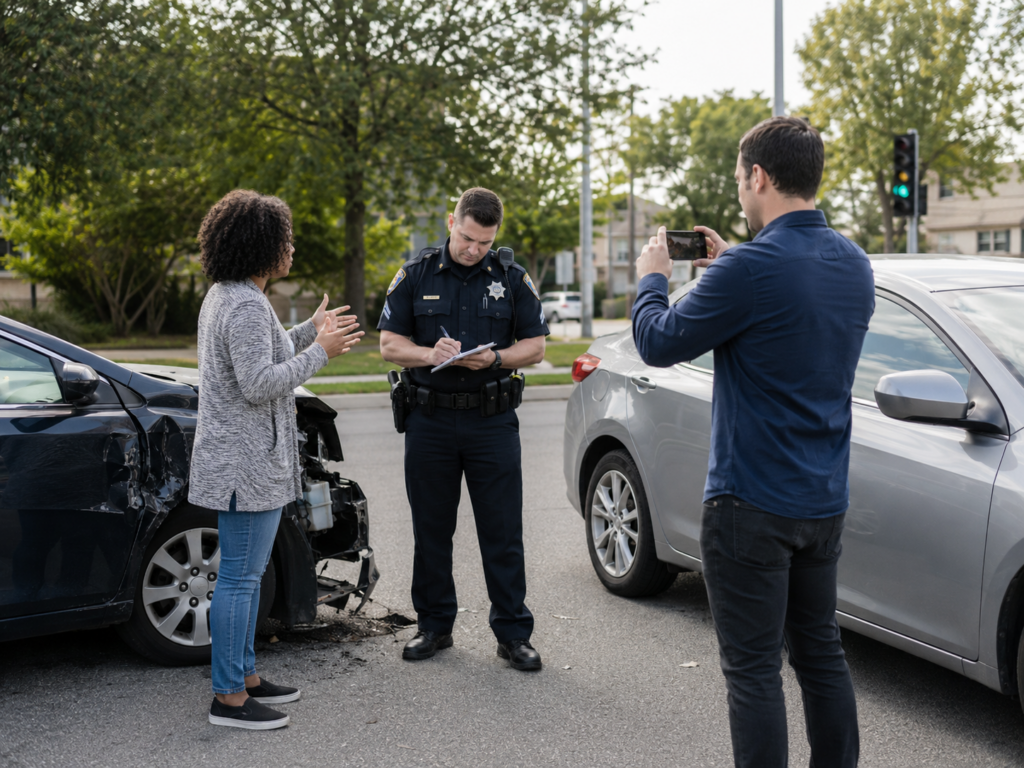
Why Car Accident Laws Matter After a Crash
After a car accident, the legal rules can determine what happens next. They may affect whether you report the crash, how fault is assigned, which insurance company handles the claim, whether you can recover medical expenses, and how settlement value is calculated.
Many people focus only on vehicle repairs immediately after an accident. That is understandable, but injury claims often involve more than property damage. A crash can lead to emergency treatment, follow-up care, physical therapy, missed work, pain, emotional stress, and long-term health concerns.
Car accident laws also matter because insurance companies use legal rules to evaluate claims. If an adjuster believes you were partly responsible, missed a deadline, failed to document injuries, or accepted payment too early, your claim may become harder to recover.
For a broader overview of the injury claim process, review personal injury claim after an accident.
Fault-Based vs. No-Fault Car Accident Rules
One of the biggest differences between states is whether the state uses a fault-based or no-fault insurance system.
In a fault-based system, the person who caused the accident is generally responsible for the damages. The injured person may file a claim against the at-fault driver’s insurance company for medical bills, lost wages, pain and suffering, vehicle damage, and other losses.
In a no-fault system, an injured person may first turn to their own insurance coverage for certain medical bills or injury-related losses, regardless of who caused the crash. No-fault rules can be complicated because some states still allow injury claims against the at-fault driver when injuries meet certain thresholds.
Because these rules vary by state, do not assume your claim works the same way as someone else’s claim in another location. For related guidance, review understanding no-fault insurance.
How Fault Is Determined After a Car Accident
Fault is usually based on evidence. Insurance companies may review police reports, driver statements, witness statements, photos, videos, vehicle damage, traffic citations, road conditions, dashcam footage, and surveillance footage.
A driver may be considered responsible if they were speeding, distracted, impaired, tailgating, ignoring traffic signals, failing to yield, making an unsafe lane change, or driving too fast for the conditions.
However, fault is not always simple. Some crashes involve shared fault. Others involve chain reactions, unclear traffic signals, road hazards, commercial vehicles, defective parts, or drivers who give conflicting stories.
If your crash involved a rear-end impact, review rear-end accident claims. If your accident happened in a parking lot, review parking lot accident claims.
Do Traffic Citations Decide Who Is Legally Responsible?
A traffic citation can be important evidence, but it does not always decide the entire claim by itself.
If a driver receives a ticket for speeding, running a red light, following too closely, reckless driving, distracted driving, or failing to yield, that citation may support the injury claim. But insurance companies may still review the full accident facts before deciding liability.
It is also possible for a driver to be at fault even if no ticket was issued. Police officers may not witness the crash, may not have enough information at the scene, or may choose not to cite anyone. That does not automatically prevent an injury claim.
For more detail, keep and internally link to how traffic citations affect car accident liability as a supporting article.
Comparative Fault and Shared Responsibility
Some car accident claims involve shared fault. This means more than one person may have contributed to the crash.
For example, one driver may have been speeding while another made an unsafe turn. One driver may have been distracted while another failed to yield. In a multi-car crash, several drivers may have played a role.
Shared fault can affect compensation. In some states, being partly responsible may reduce the amount you can recover. In other states, being even slightly at fault can create more serious problems. Because the rules vary, it is important to understand how your state handles shared responsibility before accepting an insurance company’s fault decision.
If an insurer says you are partly responsible and you disagree, gather evidence before accepting that conclusion.
Car Accident Reporting Rules
Many accidents should be reported, especially when someone is injured, there is significant vehicle damage, a driver leaves the scene, a commercial vehicle is involved, or there is a dispute about fault.
A police report can help document the date, time, location, drivers, vehicles, insurance information, visible damage, witness details, and the officer’s observations. Even if the report is not perfect, it can become an important part of the claim file.
If you are not sure what to do immediately after a crash, review what to do immediately after a car accident.
Medical Treatment and Injury Documentation
Car accident laws and insurance rules are only part of the claim. Medical documentation is just as important.
If you are injured, get medical care as soon as possible. Delayed treatment can hurt your health and give the insurance company an argument that your injuries were not caused by the accident.
Keep records of emergency care, doctor visits, physical therapy, imaging, prescriptions, diagnoses, work restrictions, and follow-up appointments. These records can help connect your injuries to the crash and show how the accident affected your daily life.
If medical bills are becoming a concern, read who pays medical bills after a car accident.

Insurance Coverage After a Car Accident
Insurance coverage can strongly affect what happens after a crash. Depending on the facts and the state, different types of coverage may become important.
Liability insurance may apply when another driver caused the accident. Collision coverage may help with vehicle repairs. Medical payments coverage or personal injury protection may help with certain medical costs. Uninsured or underinsured motorist coverage may matter if the at-fault driver has no insurance or not enough insurance.
Policy limits can also affect recovery. Even when injuries are serious, the amount of available insurance may limit what can be paid through a particular policy.
For uninsured-driver situations, review uninsured motorist accident claims.
Deadlines for Car Accident Claims
Every state has deadlines for car accident injury claims. These deadlines are often called statutes of limitations. If you wait too long, you may lose the ability to pursue compensation.
Deadlines can vary depending on the state, the type of claim, the responsible party, whether a government vehicle or public property is involved, and other facts. Some claims may also have shorter notice requirements.
Because deadlines can be strict, do not wait until the last minute. If you are unsure how much time you have, request a free case evaluation as early as possible.
How Car Accident Laws Affect Settlements
Car accident laws can affect settlement value in several ways. Fault rules may determine whether compensation is available. Insurance laws may determine which policy applies. Damage rules may affect what losses can be included. Deadlines may determine whether the claim can still move forward.
A settlement may include medical bills, future medical care, lost wages, reduced earning ability, pain and suffering, vehicle damage, rental expenses, and other losses. The value depends on the severity of the injury, available insurance, evidence of fault, treatment records, and the long-term impact of the crash.
For a deeper explanation, review car accident settlement amounts.
Mistakes That Can Hurt a Car Accident Claim
Several mistakes can weaken a claim after a crash. These include failing to get medical care, not reporting the accident, admitting fault too early, giving inconsistent statements, losing evidence, missing deadlines, posting about the crash on social media, accepting a quick settlement, or signing forms without understanding them.
Insurance companies may use these mistakes to reduce or deny payment. That is why it is important to document everything, be careful with statements, and understand your options before making decisions that affect the claim.
When to Request a Free Case Evaluation
You should consider a free case evaluation if you were injured, medical bills are increasing, fault is disputed, the insurance company is blaming you, the other driver was uninsured, the settlement offer seems low, or you are unsure what laws apply in your state.
You may also want help if the crash involved a commercial vehicle, rideshare driver, multi-car collision, hit-and-run, pedestrian injury, serious injury, or unclear insurance coverage.
Car accident laws can be confusing, especially when state rules, insurance policies, fault disputes, and injury documentation all overlap. A free case evaluation can help you understand what next steps may make sense.
Conclusion
Car accident laws affect fault, insurance coverage, medical bills, deadlines, settlements, and the steps you should take after a crash. Because these laws vary by state, it is important to avoid assumptions and focus on protecting your claim early.
Report the accident when appropriate, get medical care, preserve evidence, avoid admitting fault, keep records, and be careful with insurance settlement offers.
If you were injured in a crash and are unsure what rules apply, request a free case evaluation to better understand your options.
FAQ Section
What are car accident laws?
Car accident laws are rules that affect fault, insurance claims, reporting requirements, injury compensation, deadlines, and legal responsibility after a crash. These laws vary by state.
Is the at-fault driver always responsible for paying after a crash?
Not always. In fault-based states, the at-fault driver’s insurance may be responsible for damages. In no-fault states, injured people may first turn to their own insurance for certain losses. The answer depends on state law and available coverage.
Does a traffic ticket prove fault after a car accident?
A traffic ticket can be strong evidence, but it does not always decide the entire claim. Insurance companies may still review witness statements, photos, damage, police reports, and other evidence.
Can I still file a claim if I was partly at fault?
You may still be able to file a claim depending on your state and the percentage of fault assigned to you. Shared fault rules vary, so it is important to understand how the rule applies to your accident.
How long do I have to file a car accident claim?
The deadline depends on the state and type of claim. Some claims, especially those involving government vehicles or public property, may have shorter notice requirements. It is best to act quickly.
What should I do after a car accident to protect my claim?
Get medical care, report the accident, take photos, gather witness information, keep records, avoid admitting fault, be careful with insurance adjusters, and request a free case evaluation if you are unsure what to do next.