A car accident demand letter is one of the most important documents in an injury claim. It explains what happened, why the other party may be responsible, what injuries and losses were caused by the crash, and what amount is being requested to resolve the claim.
Many accident victims do not realize how much this letter can affect the direction of the case. A weak demand letter may leave out important damages, fail to connect injuries to the crash, or give the insurance company room to reduce the offer. A stronger demand letter is organized, factual, well-supported, and backed by evidence.
If you were injured in a crash and are unsure how to handle the insurance company, you can request a free case evaluation to better understand your next step.
What Is a Car Accident Demand Letter?
A car accident demand letter is a written request sent to an insurance company or responsible party after a crash. It usually explains the accident, the injuries, the medical treatment, the financial losses, and the settlement amount being requested.
The letter is often sent after medical treatment has progressed enough to understand the injuries and costs. Sending it too early can be risky if you do not yet know the full extent of your medical bills, future treatment needs, lost wages, or long-term symptoms.
A demand letter is not just a complaint. It is a structured claim document. It should tell the story clearly, show why the claim has value, and include evidence that supports the demand.
For broader claim guidance, review personal injury claim after an accident.
When Should You Send a Demand Letter After a Car Accident?
A demand letter is usually sent after you have gathered enough information to support the claim. This may include the police report, photos, medical records, repair estimates, wage-loss records, insurance information, and proof of how the accident affected your daily life.
In many cases, it is better to wait until you have a clearer medical picture. If you send the letter before treatment is complete, you may underestimate your damages. Once a settlement is accepted and a release is signed, it may be difficult or impossible to ask for more money later.
That does not mean you should delay forever. Evidence can disappear, memories can fade, and claim deadlines still matter. The goal is to send the demand letter when the claim is documented enough to make a strong request.
If you are unsure how the settlement value may be calculated, review car accident settlement amounts.
What Should a Car Accident Demand Letter Include?
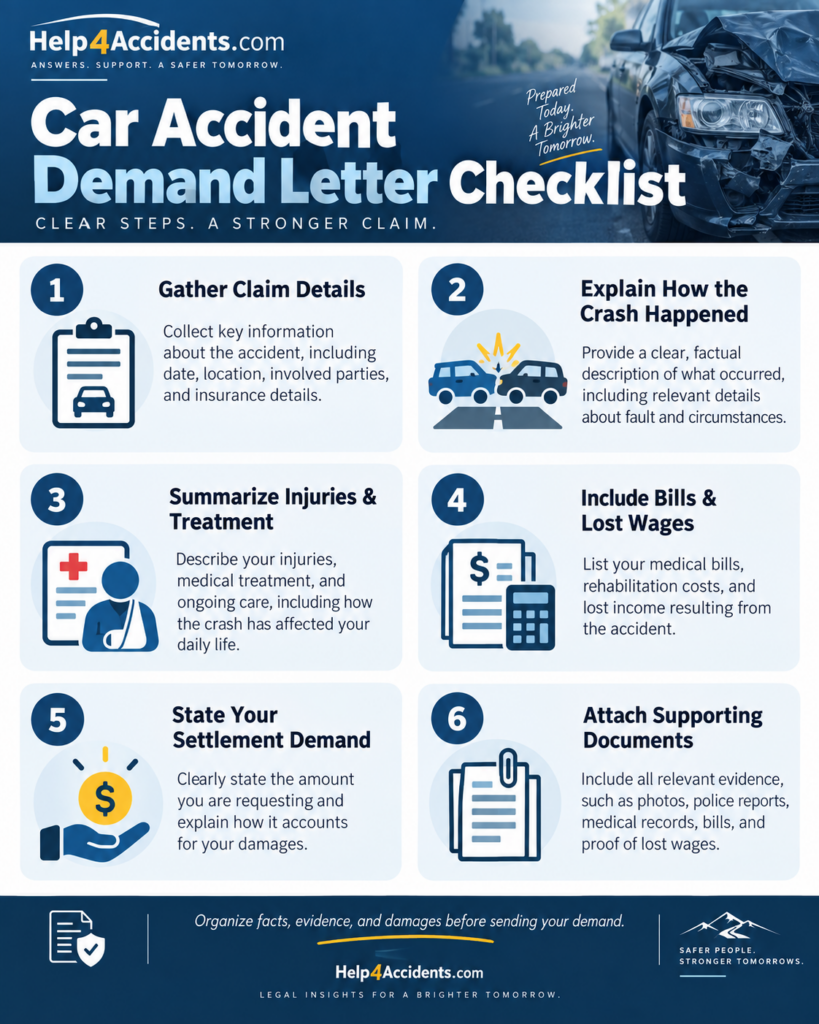
A strong car accident demand letter should be clear, organized, and supported by documents. It should usually include the date of the accident, location, parties involved, insurance claim number, a description of what happened, why the other party may be responsible, and a summary of injuries.
It should also explain medical treatment, medical bills, lost wages, property damage, pain and suffering, future treatment concerns, and the total settlement demand.
The letter should avoid emotional exaggeration. It should focus on facts, documentation, and the real impact of the accident. Insurance companies review demand letters carefully, so unsupported claims or inconsistent details can weaken your position.
For evidence-related support, review what evidence helps the most in a car accident claim.
Basic Car Accident Demand Letter Structure
A car accident demand letter does not need to be confusing. A clean structure is usually best.
Start with basic claim information. Include your name, the date of the crash, the claim number, the insured driver’s name, and the insurance company information.
Next, summarize the accident. Explain where it happened, how it happened, and why the other driver may be responsible. Keep this section factual and avoid guessing.
Then summarize your injuries and treatment. Mention emergency care, doctor visits, physical therapy, imaging, prescriptions, specialist appointments, and any ongoing symptoms.
After that, list your damages. This may include medical bills, future care, lost wages, vehicle damage, rental expenses, pain and suffering, and out-of-pocket costs.
Finally, state the settlement demand and ask for a written response by a reasonable date.
Documents to Attach With a Demand Letter
A demand letter is stronger when it is supported by documents. Attachments may include the police report, photos of the crash scene, photos of vehicle damage, medical records, medical bills, repair estimates, rental car receipts, wage-loss proof, employer letters, prescriptions, imaging reports, and witness statements.
If medical bills are still being reviewed, keep the claim organized. Medical bills can affect settlement value, reimbursement issues, and the final amount you may receive. For more detail, review who pays medical bills after a car accident.
If the insurance company has already made a low offer, include documentation showing why that offer does not reflect the full claim value.
Car Accident Demand Letter Example Outline
Here is a simple example outline you can use for planning:
Claim Information
Name, accident date, claim number, insurance company, and at-fault driver information.
Accident Summary
A short, factual explanation of how the crash happened and why the other driver may be responsible.
Injuries and Treatment
A summary of symptoms, diagnosis, medical care, follow-up treatment, and ongoing limitations.
Damages
Medical bills, lost wages, vehicle damage, out-of-pocket costs, future treatment, pain and suffering, and other accident-related losses.
Settlement Demand
A specific demand amount, supported by the facts and documents.
Response Request
A request for a written response by a specific deadline.
This outline is general information only. The right demand letter depends on the facts of the accident, available evidence, insurance coverage, and the value of the claim.
Common Mistakes in a Car Accident Demand Letter
One of the biggest mistakes is sending the demand letter too early. If you do not yet know your diagnosis, treatment plan, future care needs, or total medical bills, the demand may be too low.
Another mistake is leaving out evidence. A demand letter should not rely only on statements. It should include records, bills, photos, reports, and documentation.
Some people also make the mistake of admitting fault, minimizing injuries, using angry language, or demanding an amount without explaining how they reached it. The more organized and factual the letter is, the stronger it usually appears.
If you are dealing with the insurance company directly, review how to handle insurance adjusters in personal injury claims.
Should You Use a Car Accident Demand Letter Template?
A template can help with structure, but it should not replace the facts of your claim. Every accident is different. A generic template may miss important details, use language that does not fit your case, or request an amount that is not supported by your records.
Use a template only as a starting point. Your letter should be customized based on the accident, injuries, treatment, bills, wage loss, pain, insurance coverage, and evidence.
If your claim involves serious injuries, disputed fault, uninsured drivers, multiple vehicles, commercial vehicles, or long-term medical care, it may be worth requesting a free case evaluation before sending a demand letter.
What Happens After You Send a Demand Letter?
After receiving a demand letter, the insurance company may review the documents, investigate liability, compare medical records, evaluate damages, and respond with an offer, denial, or request for more information.
The first offer may be lower than expected. This is common. Insurance companies may question treatment, dispute injury severity, argue about fault, or claim that some bills are unrelated.
Do not assume the first response is final. If the offer is low, you may need to provide additional documentation, correct errors, explain treatment, or negotiate. For related guidance, review lowball settlement offer after a car accident.
When to Request a Free Case Evaluation
You should consider a free case evaluation before sending a demand letter if your injuries are serious, your treatment is ongoing, fault is disputed, the insurance company is blaming you, medical bills are high, you missed work, or you are unsure what amount to demand.
You may also want help if the other driver has no insurance, the crash involved a rideshare or commercial vehicle, or the insurance company has already made a low offer.
A demand letter can shape the negotiation process. Before sending one, make sure your claim is documented, your damages are included, and you understand what you may be giving up if you later accept a settlement.
Start here: Get a Free Case Evaluation.
Conclusion
A car accident demand letter should clearly explain what happened, why the other party may be responsible, what injuries and losses were caused by the crash, and what settlement amount is being requested.
The strongest demand letters are factual, organized, and supported by evidence. Include medical records, bills, photos, repair estimates, wage-loss proof, and other documentation that helps show the full impact of the accident.
If you were injured and are unsure how to prepare a demand letter or respond to the insurance company, request a free case evaluation to better understand your next step.
FAQ Section
What is a car accident demand letter?
A car accident demand letter is a written request sent to an insurance company or responsible party. It explains the crash, injuries, damages, evidence, and the settlement amount being requested.
When should I send a demand letter after a car accident?
A demand letter is usually sent after you have gathered evidence and understand your medical treatment, bills, lost wages, and other damages. Sending it too early may lead to an undervalued demand.
What should be included in a car accident demand letter?
A demand letter should include claim information, accident facts, liability explanation, injuries, medical treatment, bills, lost wages, property damage, pain and suffering, supporting documents, and a settlement demand.
Can I use a car accident demand letter template?
A template can help with structure, but the letter should be customized to your accident, injuries, evidence, treatment, bills, insurance coverage, and settlement value.
What happens after a demand letter is sent?
The insurance company may review the claim, request more information, make an offer, deny the claim, or begin settlement negotiations.
Should I accept the first offer after sending a demand letter?
Be careful before accepting the first offer. It may not include future medical care, lost wages, pain and suffering, or the full value of your claim.