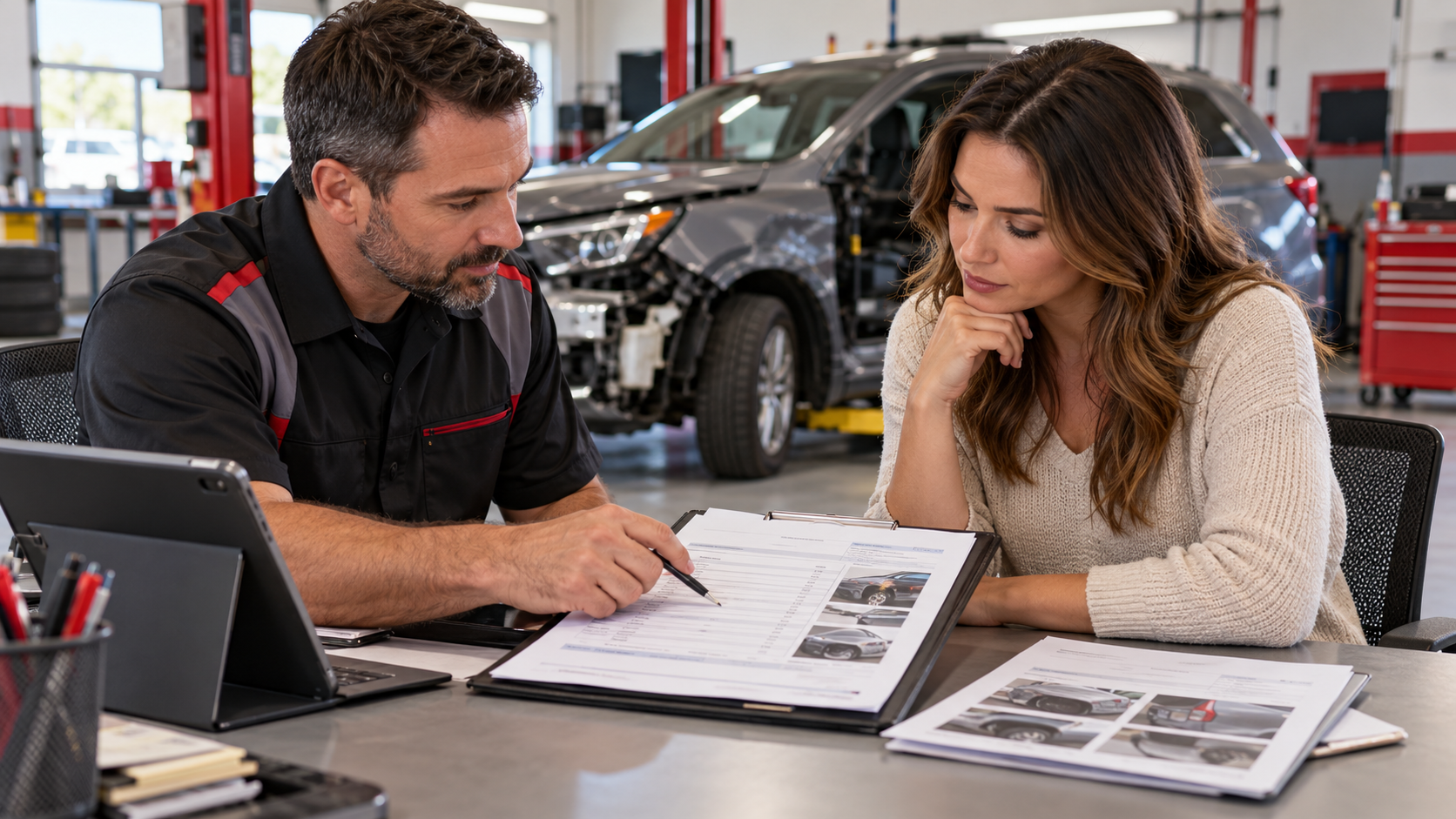
A car accident repair estimate can look precise, but it is still an estimate. It reflects the damage that an insurer, adjuster, appraiser, or repair shop could identify at a particular point in the claim. Once a shop removes panels or begins disassembly, additional damage may be discovered and the repair plan may change.
Before you authorize repairs, slow down long enough to understand what the document includes, what it leaves open, and who must approve any additional work. That review can reduce misunderstandings about parts, labor, deductibles, hidden damage, storage costs, and supplemental estimates.
This guide provides a practical checklist for reviewing a car accident repair estimate. Insurance policies, claim procedures, and repair rules vary by state. The information is educational and is not individualized legal advice.
Who Prepared the Repair Estimate?
Start by identifying the document’s author. You may receive an estimate from:
- an insurer’s staff or independent appraiser;
- a photo-estimating or virtual-inspection process;
- a body shop selected by you;
- a shop in an insurer’s repair network; or
- more than one of these sources.
The insurer’s estimate and the repair shop’s estimate may serve different functions. A difference does not automatically establish that either party is acting improperly. It means the line items, repair methods, part assumptions, and visible damage need to be compared.
Also determine which coverage is involved. A claim under your own collision coverage operates under your policy, including its deductible and conditions. A property-damage claim against another driver’s insurer is a third-party claim and may follow a different process. Collision and comprehensive coverage also address different causes of loss, so confirm which coverage the insurer is applying.
Confirm the Basic Claim and Vehicle Details
An estimate cannot be accurate if it identifies the wrong vehicle configuration, damage area, or claim. Check:
- your name and claim number;
- vehicle year, make, model, trim, and identification details;
- date of loss;
- mileage if listed;
- point of impact and damage areas;
- repair facility information;
- deductible, if applicable; and
- estimate version and date.
Keep every version of the estimate. A later revision or supplement should not erase the record of what was originally identified and what changed.
Review Labor Operations and Hours
Repair estimates usually separate work into operations such as remove and install, repair, replace, refinish, measure, scan, or calibrate. Look beyond the total price and review what work is actually listed.
Questions to ask include:
- Which panels or components will be repaired rather than replaced?
- Which parts must be removed to reach the visible damage?
- Are paint preparation, blending, and refinishing identified?
- Does the plan address scans, calibrations, measurements, or safety-system procedures the shop says are needed?
- Are labor rates and hours clearly shown?
- Which operations are included within another line item rather than charged separately?
Ask the shop to walk through unfamiliar operations and show where they appear on the written estimate.
Check the Part Descriptions
An estimate may reference original-equipment, alternative, aftermarket, recycled, reconditioned, or other categories of parts. Terminology varies, and policy language or state rules may affect what is considered.
For each major replacement part, ask:
- What type of part is listed?
- Is that the part the repair shop plans to use?
- Is the part currently available?
- Does the price include required brackets, clips, fasteners, or related components?
- What warranty applies to the part and the work?
- If the shop recommends a different part or procedure, how will it seek approval?
Do not assume that an insurer must accept any requested part type or repair method. Those questions can depend on the policy, state law, manufacturer information, and the repair facts. Request written explanations for material disagreements.
Look for Paint, Materials, Taxes, and Fees
Review whether the estimate addresses:
- paint and refinishing labor;
- paint and body materials;
- color matching or blending where proposed;
- hazardous-waste or disposal charges;
- taxes;
- diagnostic, scan, or calibration charges;
- towing or storage already incurred;
- administrative charges; and
- your deductible or other amount identified as your responsibility.
Ask whether any charge is an estimate, a fixed amount, or subject to change. If the vehicle is sitting at a tow yard or repair facility while the claim is reviewed, understand whether storage fees are accumulating. Our guide to towing and storage fees after a car accident explains why those charges need prompt attention even when the rest of the claim remains unresolved.
Ask How Hidden Damage and Supplements Will Be Handled
Some damage cannot be fully evaluated until the shop disassembles part of the vehicle. A supplemental estimate is a request to add repair operations, parts, labor, or costs that were not included in the initial estimate.
Before work begins, ask:
- What happens if the shop discovers additional damage?
- Will the shop pause and contact you before additional work?
- Who submits the supplement to the insurer?
- Will the insurer reinspect the vehicle or review photos and documents?
- Can you receive a copy of every supplement and approval?
- Who may be responsible if work is performed before required approval?
- How could a supplement affect the completion date?
Keep the shop’s documentation, insurer responses, photographs, and revised estimate together.
Compare the Shop’s Findings With the Insurer’s Estimate
If the totals differ, compare line by line rather than focusing only on the bottom number. Differences may involve:
- damage one inspection did not include;
- repair-versus-replace decisions;
- part type or price;
- labor rates or hours;
- paint and material calculations;
- scans, measurements, or calibrations;
- taxes and fees; or
- work discovered during disassembly.
Ask the repair facility to identify the disputed or missing line items. Provide that explanation to the claims representative and request a written response. A lower initial estimate is not by itself proof of bad faith, and a higher shop estimate is not automatically the amount an insurer must pay.
If payment remains below the documented repair cost, review what to do when the insurance check does not cover the full repair cost. That issue is easier to evaluate when you have preserved all estimates, supplements, approvals, and receipts.
Do Not Sign Paperwork You Do Not Understand
Repair authorizations, direction-to-pay forms, assignments, releases, storage agreements, and teardown permissions may have different consequences. Read the entire document and ask what it permits.
Before signing, confirm:
- the scope of work you are authorizing;
- whether disassembly or diagnosis is included;
- whether additional work requires your approval;
- who will receive insurance payments;
- whether you could owe charges the insurer does not approve;
- what happens if you move the vehicle to another facility; and
- whether the document contains a release unrelated to the repair.
Do not sign an incomplete form or rely on a verbal promise that conflicts with the written document. If you are unsure what the paperwork means, consider asking a qualified local professional to review it.
Car Accident Repair Estimate Checklist
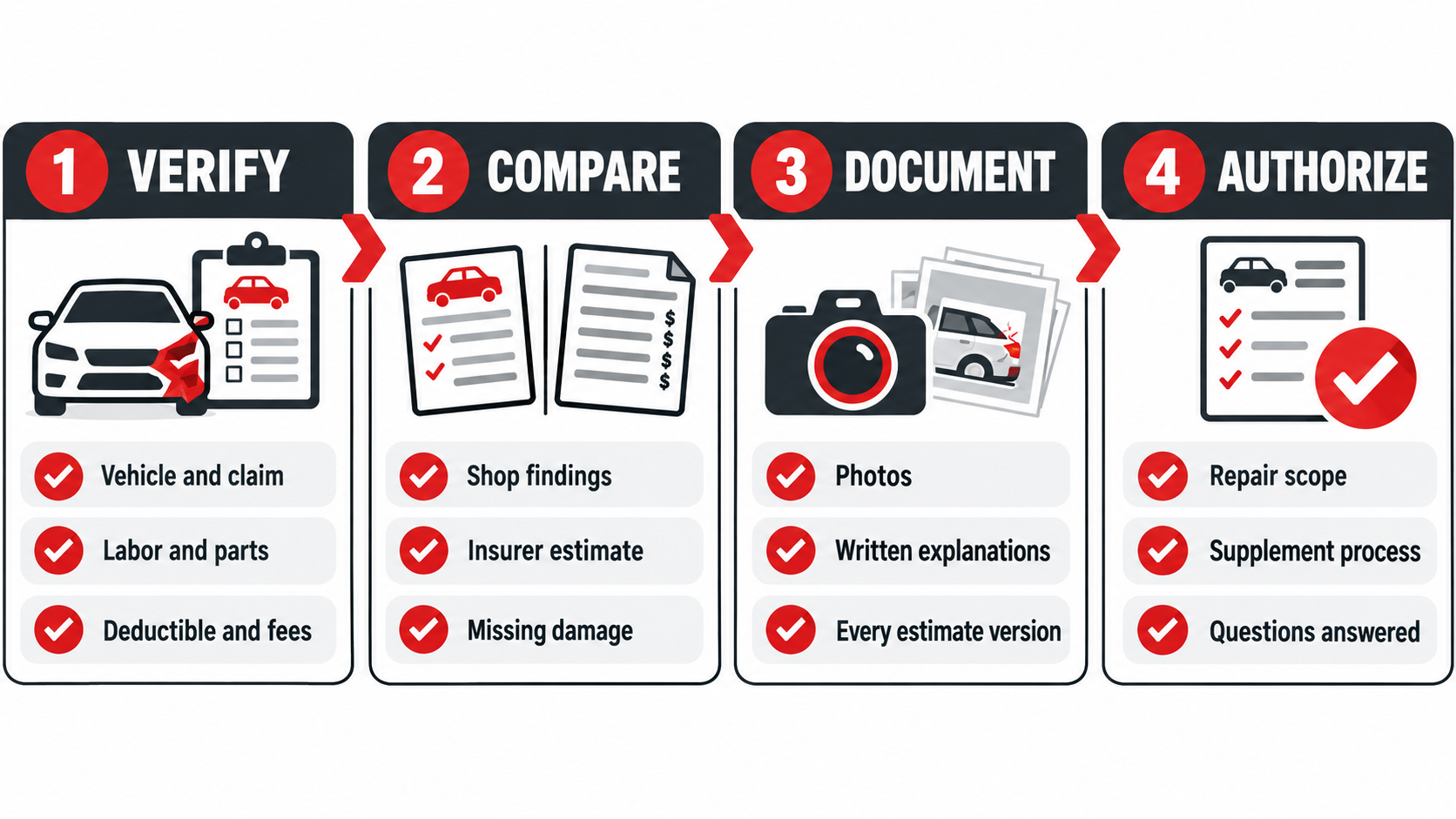
Verify
- Confirm the vehicle, claim, damage areas, deductible, shop, and estimate version.
- Identify whether this is your own coverage claim or a third-party claim.
- Make sure the document belongs to your loss and vehicle configuration.
Compare
- Review labor operations, hours, rates, and repair-versus-replace decisions.
- Check the listed part types and major missing components.
- Compare the shop’s estimate with the insurer’s line by line.
- Ask how paint, materials, taxes, scans, calibrations, and fees are treated.
Document
- Photograph the vehicle before repairs and after any additional damage is exposed.
- Keep every estimate, supplement, email, text, receipt, and approval.
- Note the date, time, person, and substance of important conversations.
- Ask for explanations of disagreements in writing.
Authorize
- Read the repair authorization and related forms completely.
- Confirm how supplements and additional work will be approved.
- Understand what you may owe and who receives payment.
- Keep a copy of every signed document.
What if the Estimate Appears Too Low?
Begin with the missing or disputed line items. Ask the shop to document why it believes additional work, parts, or procedures are necessary. Send that material through the insurer’s stated supplement or dispute process and request a written explanation of the decision.
Review your policy if the claim is under your own coverage. If the dispute remains unresolved, your state insurance department may offer consumer information or a complaint process. State-specific rules vary, so use the regulator for the state connected to the policy and claim rather than assuming another state’s rules apply.
What if the Vehicle May Be a Total Loss?
When estimated repair costs and other factors reach the insurer’s applicable total-loss evaluation, the claim may shift from a repair discussion to a vehicle-value discussion. The applicable method and threshold can vary by state and claim.
Do not authorize extensive repairs until you understand whether the insurer is still evaluating the vehicle as repairable. If the vehicle is declared a total loss, review our guide to what happens after a total-loss decision.
Time without a usable vehicle may create practical costs. Coverage and recovery vary, but preserve rental receipts and learn how loss-of-use claims are evaluated.
A Clear Record Makes the Estimate Easier to Resolve
Verify the vehicle and claim details, compare each major operation, understand the part descriptions, document hidden damage, and clarify the supplement process before authorizing work.
If a dispute involves significant costs, unclear paperwork, or possible legal rights, consider speaking with a qualified professional in the relevant state. Rules and policy terms vary, and general information cannot determine what an insurer, shop, or driver must do in an individual claim.
Educational disclaimer: This article provides general educational information and is not legal advice. Insurance coverage, repair rights, claim procedures, and deadlines vary by policy and jurisdiction. Readers should review their policy, obtain explanations in writing, and consult their state insurance department or a qualified local professional for state-specific questions.