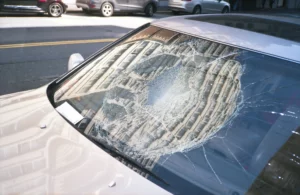
After a car accident, waiting for an insurance adjuster can make an already stressful situation worse. Your vehicle may need repairs, medical bills may be arriving, and you may need answers about transportation, coverage, or the next step in the claim. When calls and messages go unanswered, it is easy to assume the claim has been forgotten—or that the silence means something improper is happening.
An insurance adjuster not responding after a car accident does not automatically prove bad faith, an unlawful delay, or a denied claim. The adjuster may be waiting for records, coverage confirmation, a liability review, another insurer, or an internal decision. But you should not accept indefinite silence without asking for a clear written status.
The safest response is organized escalation: confirm the claim details, identify anything outstanding, create a written record, and move the issue to the correct person when needed. Rules and response requirements vary by state, policy, claim type, and whether the adjuster works for your insurer or another driver’s insurer. This article provides general educational information, not individualized legal advice.
First, Identify Which Adjuster You Are Dealing With
Before escalating, confirm the adjuster’s role. You may be communicating with:
- your own auto insurer about collision, comprehensive, medical payments, personal injury protection, uninsured motorist coverage, or another policy benefit;
- the other driver’s liability insurer;
- a separate property-damage adjuster;
- a bodily-injury adjuster;
- an independent adjuster working for an insurer; or
- a total-loss or appraisal specialist who became involved after the first contact.
The relationship matters. Your insurer’s obligations arise from your policy and applicable state law. Another driver’s insurer does not have the same contractual relationship with you and may still be investigating fault, coverage, or its insured’s cooperation.
Write down the company, claim number, adjuster’s full name, department, direct number, email, and the type of claim being handled. If those details are unclear, call the insurer’s main claims line rather than continuing to leave messages at an unverified extension.
Why an Insurance Adjuster May Stop Responding
Common explanations include:
- the adjuster is waiting for a police report, photos, repair estimate, medical record, wage document, or signed form;
- coverage is under review;
- fault is disputed or several vehicles are involved;
- the insurer has not reached its policyholder or a witness;
- different adjusters are handling property damage and injuries;
- the file was transferred, reassigned, or escalated;
- the adjuster is out of the office or managing a heavy claim volume; or
- the claim has a disputed issue that requires supervisory or legal review.
You do not need to guess which reason applies. Ask the insurer to identify the specific unresolved item and the expected next step.
What to Do When the Adjuster Does Not Respond
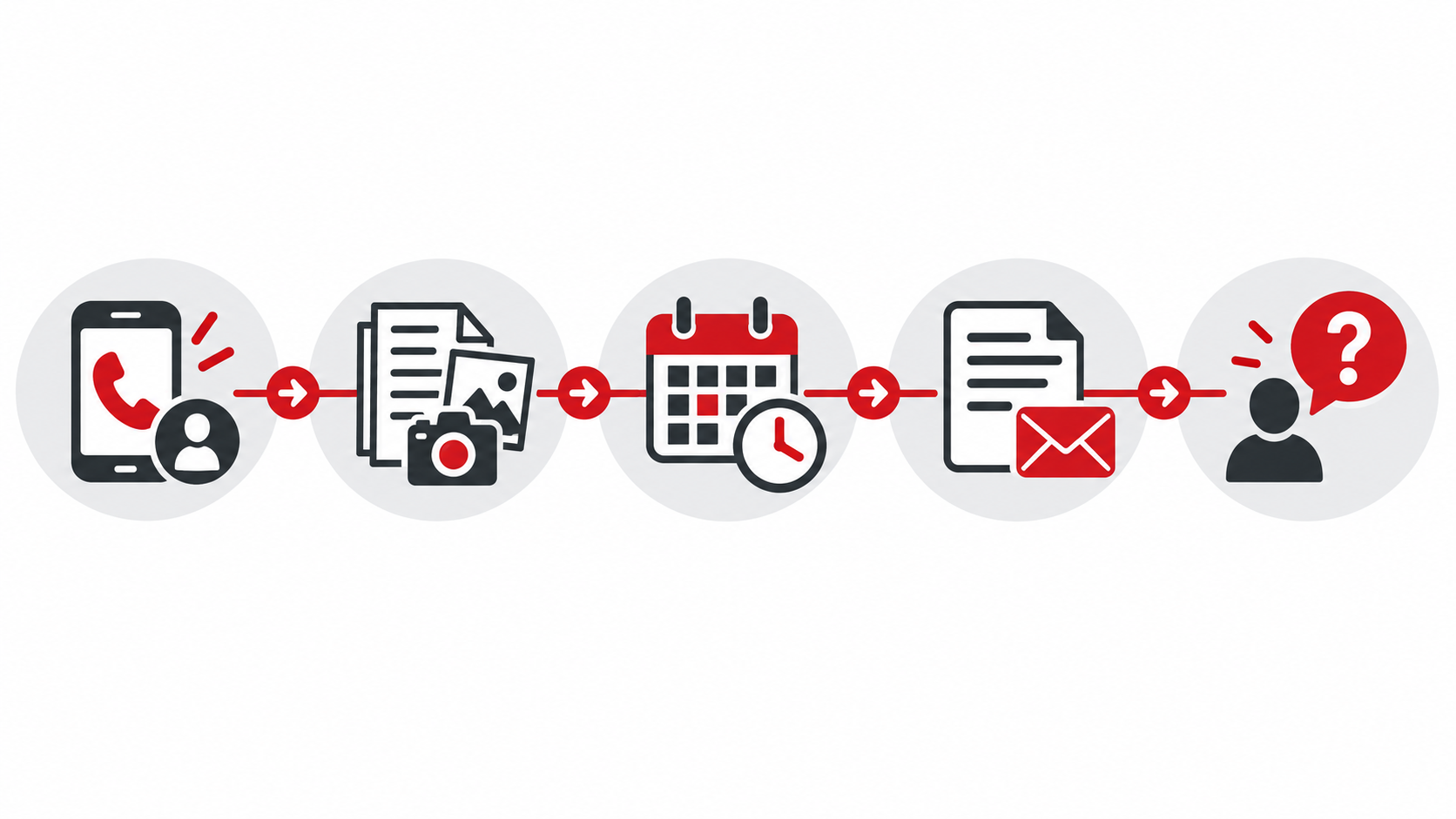
1. Confirm the claim is open and the contact details are correct
Call the insurer’s published claims number. Confirm the claim number, assigned adjuster, adjuster’s contact information, and current status. Ask whether the file was reassigned or whether a different department now owns the issue.
If you reported the crash through an app or online portal, check for messages, document requests, or a status change there. Save screenshots or downloads of important communications.
2. Check whether the insurer is waiting for something from you
Ask for an itemized list of outstanding information. Confirm whether the insurer received documents you already sent and whether each item was attached to the correct claim.
Potential items may include photographs, a police report, repair estimates, proof of ownership, medical bills, treatment records, employment verification, receipts, or a completed claim form. Provide relevant information accurately and keep a copy. If a request is unusually broad or you do not understand an authorization, ask what it covers and consider legal advice before signing.
For a broader documentation checklist, see what evidence helps the most in a car accident claim.
3. Send one clear written follow-up
Move beyond repeated voicemail messages. Send a concise email, portal message, or letter containing:
- your name and contact information;
- claim number and accident date;
- the question or decision you are waiting for;
- documents previously submitted and their dates;
- your earlier contact attempts; and
- a request for the next expected update.
Ask the adjuster to confirm what is complete, what remains outstanding, and whether anything is needed from you. Written communication creates a record and gives the insurer a specific question to answer.
4. Keep a contact log
Record every call, voicemail, email, letter, and portal message. Include the date, time, number or address used, person contacted, summary of the conversation, and promised follow-up.
Also keep copies of bills, repair estimates, photographs, medical records, work-loss documents, towing and storage charges, rental or transportation expenses, and claim correspondence. A clean chronology becomes valuable if a supervisor, regulator, or attorney later reviews the handling of the claim.
5. Call the main claims line
If the assigned adjuster remains unavailable, call the insurer’s main claims department. Ask whether the adjuster is active, whether the file was reassigned, and whether another representative can provide a status.
Be specific. “No one is helping me” is difficult to route. “I submitted the repair estimate on September 18 and need confirmation that it is in the file and scheduled for review” identifies the unresolved task.
6. Request a supervisor or reassignment
When repeated, documented attempts do not produce a meaningful response, ask for the adjuster’s supervisor or the insurer’s consumer complaint department. Provide the timeline and state the outcome you are requesting, such as confirmation of coverage review, an inspection date, acknowledgment of medical records, or a written explanation of what remains under investigation.
Requesting a supervisor does not guarantee a particular claim outcome. It creates another opportunity for the insurer to identify and address the communication problem.
7. Review the policy and claim instructions
If you are making a claim under your own policy, review the applicable coverage, duties after a loss, notice requirements, proof-of-loss provisions, cooperation terms, and dispute options. Policies may describe different procedures for vehicle valuation, appraisal, arbitration, or other disagreements.
Do not assume that every policy procedure applies to every dispute. When the language is unclear or the issue is significant, seek advice about the specific policy and state law.
8. Contact the applicable state insurance department when appropriate
The National Association of Insurance Commissioners explains that consumers who try to resolve a claim-handling problem with the insurer and remain dissatisfied may contact their state Department of Insurance. The NAIC identifies lack of timely communication and potentially unfair claim delays or denials among the issues a department may review.
Complaint procedures and regulator authority vary by state. A state department is not your personal lawyer and does not replace a court, but it can request the insurer’s explanation and evaluate compliance with applicable rules. Use the NAIC insurance complaint directory to find the correct department and instructions.
Prepare a factual chronology, claim or policy number, key correspondence, relevant supporting records, and the specific response you are seeking.
9. Consider legal guidance
Legal advice may be important when the silence involves serious injuries, disputed fault, multiple insurers, a coverage issue, an approaching deadline, significant lost income, a death, or a large difference between documented losses and the insurer’s position.
An attorney can evaluate the law and deadlines in the relevant jurisdiction, preserve evidence, communicate with insurers, and advise which escalation or claim strategy fits the facts. Do not wait for an adjuster’s return call if doing so may place an important legal or contractual deadline at risk.
A Written Follow-Up Template
You can adapt this message:
> Subject: Status request — Claim [number]
>
> I am requesting a written status update regarding the claim arising from the [date] collision. Please confirm whether the materials I submitted on [dates] are in the claim file, identify any specific information still needed from me, and explain the next step and expected date of the next update. I previously attempted to reach the assigned adjuster on [dates]. My current contact information is [phone/email].
Keep the message accurate and focused. Do not include assumptions about fault, coverage, injuries, or law that you cannot support.
Continue Protecting the Claim While You Wait
Follow medical advice and keep records
Do not ignore medically appropriate care because the insurer has not responded. Keep appointment records, bills, prescriptions, and provider instructions. If a treatment or billing issue arises, discuss it with the provider and obtain case-specific advice when needed.
Preserve accident evidence
Save vehicle photographs, scene evidence, witness details, repair documents, damaged property, and electronic communications. Video may be overwritten and vehicles may be repaired or disposed of, so preservation can be time-sensitive.
Be careful with statements and authorizations
Before giving a recorded statement or signing a broad medical authorization or release, understand who is requesting it, what it covers, and how it may be used. Read what to know about a recorded statement after a car accident for additional general guidance.
Do not assume the open claim pauses deadlines
An unresolved insurance claim does not necessarily extend a policy deadline, notice requirement, or statute of limitation. The applicable dates vary by state and claim. Obtain jurisdiction-specific advice when timing may matter.
Avoid posting claim details publicly
Public posts, photographs, or comments can be misunderstood or used in a dispute. Keep claim communications organized and directed to the appropriate insurer or professional.
When Silence Is Different From a Denial
No response and a claim denial are not the same. A denial should ordinarily identify the insurer’s position and may reference policy language or factual reasons. Silence leaves the status unclear.
If you receive a denial or reservation-of-rights letter, read it carefully, preserve the envelope or delivery record, and note any stated review or appeal procedure. The next step may be different from the communication escalation described here.
Likewise, do not confuse pre-settlement delay with the time required to issue payment after a settlement has been finalized. If an agreement has already been reached, see how long it may take to receive a settlement check after a car accident for the separate post-settlement stage.
Common Mistakes When an Adjuster Is Unresponsive
Leaving many vague messages
Repeatedly saying “call me back” creates less clarity than one written request identifying the exact unresolved issue.
Sending original documents without copies
Retain a complete file and use trackable delivery where appropriate.
Losing track of who handles each part of the claim
Property damage and bodily injury may have different adjusters. Confirm the role of each contact.
Assuming silence proves misconduct
Document the facts and ask for an explanation. Whether conduct violates a policy or law depends on the circumstances and jurisdiction.
Accepting an offer simply to end the wait
Understand what a settlement and release resolve, including whether future losses are included. Consider advice before signing when injuries or losses may continue.
Keep the Process Organized and Escalate in Stages
When an insurance adjuster does not respond after a car accident, start with verification rather than assumptions. Confirm the claim and adjuster, identify outstanding documents, send a focused written request, keep a contact log, and contact the claims line or supervisor if necessary. Review your policy and use the appropriate state insurance department when an unresolved communication problem warrants regulatory assistance.
For the larger sequence from collision through claim resolution, read the complete car accident claim guide.
If you were injured and need help understanding the next step, you can request a free case evaluation with a participating attorney. Help4Accidents is not a law firm and does not provide legal advice. Results are not guaranteed, and the appropriate action depends on the facts and law applicable to your situation.