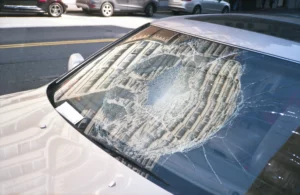
A child’s car seat may look normal after a collision, but appearance alone does not determine whether it should be used again. Crash severity, damage near the seat, air-bag deployment, injuries, and the manufacturer’s instructions all matter.
The safest next step is to stop and evaluate the seat before transporting a child in it again. This guide explains when federal safety guidance recommends replacement, what to document for an insurance claim, and how to choose and install a replacement. It provides general safety and claims information, not individualized legal or insurance advice.
Does a car seat always need to be replaced after a crash?
No. The National Highway Traffic Safety Administration (NHTSA) says car seats should be replaced after a moderate or severe crash, but they do not automatically need replacement after a minor crash. NHTSA defines a minor crash narrowly: all five of its criteria must be satisfied.
According to NHTSA’s car-seat replacement guidance, a crash is minor only when:
- The vehicle could be driven away from the crash site.
- The vehicle door nearest the car seat was not damaged.
- No passenger in the vehicle was injured.
- No air bag deployed.
- The car seat has no visible damage.
If even one condition is not met, do not classify the collision as minor under this test. NHTSA says never to use a car seat that has been involved in a moderate or severe crash.
The manufacturer’s instructions still control
NHTSA also tells caregivers to follow the car-seat manufacturer’s instructions. Some manufacturers direct owners to replace a restraint after any crash, even when all five NHTSA minor-crash criteria are met. Others use the NHTSA criteria or provide their own inspection and replacement instructions.
Find the model name, model number, and manufacture date on the seat’s label. Check the owner’s manual or contact the manufacturer using the number on the label or its official website. Ask for the answer in writing when possible, especially if you will submit the replacement cost to an insurer.
Do not rely on general advice for a different model. A manufacturer’s direction for one seat may not apply to another.
What to do with the car seat immediately after the accident
If the crash was moderate or severe, or if the manufacturer requires replacement, do not continue using the seat. If emergency transportation is necessary, follow instructions from emergency personnel. For later trips, obtain an appropriate replacement before transporting the child.
Before moving or disposing of the original seat, preserve useful evidence:
- Photograph the entire seat from several angles.
- Photograph the harness, shell, base, lower-anchor connectors, and tether.
- Photograph the model-number and manufacture-date labels.
- Photograph the vehicle door and interior area nearest the seat.
- Record whether the seat was occupied and how it was installed.
- Save the purchase receipt or another record of the original model and price.
- Keep the crash report number and insurance claim number.
These records can help an adjuster identify the item and evaluate a property-damage request. For other documentation to preserve, see what evidence helps in a car accident claim.
Can insurance pay for a replacement car seat?
Coverage varies by policy, state law, fault, and claim type. The cost might be considered as part of a first-party collision claim, another driver’s property-damage liability claim, or another available coverage. It is not safe to assume that every insurer automatically pays or uses the same procedure.
Contact the adjuster promptly and ask:
- whether the claim covers a crash-involved child restraint;
- which documents are required;
- whether the insurer needs photographs or an inspection before disposal;
- whether it reimburses after purchase or pays another way;
- whether there is a limit based on the original seat or a comparable replacement; and
- how to submit the receipt.
Provide NHTSA guidance and the manufacturer’s written replacement instruction if they support replacement. Keep copies of everything submitted and request the coverage decision in writing. If a property-damage claim is being handled separately from an injury claim, review how separate property-damage claims work.
Should you throw the damaged seat away immediately?
Not until you know whether the insurer, manufacturer, or another involved party needs photographs, labels, or an inspection. Discarding an item too quickly can eliminate proof of its identity and condition. That does not mean a crash-involved seat should be reused while the claim is pending. Store it somewhere it cannot accidentally be placed back into service.
Once documentation is complete and no inspection is required, follow the manufacturer’s disposal instructions and local waste rules. A seat that should not be reused should be made unusable before disposal—for example, as the manufacturer or local program directs—so another family does not unknowingly take it.
Do not donate, sell, or give away a seat that the manufacturer or NHTSA guidance says should be replaced.
How to select the replacement
A replacement does not necessarily have to be the same brand, but it must be appropriate for the child and vehicle. NHTSA recommends choosing a seat based on the child’s age and size, confirming that it fits the vehicle, and using it every trip. The seat’s height and weight limits are found in its instructions and labels.
When installing the replacement:
- read both the car-seat manual and the vehicle owner’s manual;
- use the seat belt or lower anchors as directed, not both unless the manufacturer allows it;
- use the top tether for a forward-facing seat when instructed;
- check the correct recline angle for a rear-facing seat; and
- confirm the installed seat does not move more than one inch side-to-side or front-to-back when tested at the belt path.
NHTSA’s installation guidance provides additional instructions. Certified Child Passenger Safety Technicians also offer inspections, often at no cost.
Register the replacement and check for recalls
Register the new seat with its manufacturer. Registration allows the manufacturer to contact you about recalls and safety notices. You can usually register with the card supplied with the seat or through the manufacturer’s website.
You can also search NHTSA’s recall database by car-seat brand and model. Keep the new receipt, model information, registration confirmation, and any insurer correspondence together.
If you are also investigating whether a vehicle defect contributed to the collision, review how vehicle recalls can affect an accident claim.
What if the seat was empty during the crash?
The NHTSA criteria focus on the crash and the restraint’s condition, not only on whether a child occupied the seat. An empty seat was still installed in the vehicle and exposed to crash forces. Apply the same NHTSA criteria and manufacturer instructions rather than assuming an unoccupied seat is automatically safe.
What if there is no visible damage?
No visible damage is only one of NHTSA’s five minor-crash conditions. A seat can look normal while the crash fails another criterion—for example, an air bag deployed, someone was injured, the nearest door was damaged, or the vehicle could not be driven away. All five conditions must be met before the crash qualifies as minor under NHTSA’s test, and the manufacturer may still require replacement.
What if the insurer denies the replacement cost?
Ask for the reason in writing and compare it with the policy, applicable claim rules, NHTSA guidance, and the manufacturer’s instructions. Confirm that the adjuster received the photos, seat identification, purchase record, and replacement direction. If information was missing, supplement the claim and request reconsideration.
A disagreement over a car seat does not automatically establish that the insurer acted unlawfully. Coverage and claims rules differ. If a significant property-damage or injury claim remains disputed, a licensed attorney in the relevant state can review the policy and facts.
Post-accident car-seat checklist
- Do not use the seat after a moderate or severe crash.
- Evaluate all five NHTSA minor-crash criteria.
- Check the specific manufacturer’s replacement instructions.
- Photograph the seat, labels, installation area, and nearby vehicle damage.
- Ask the insurer what documentation or inspection it requires.
- Store the original seat where it cannot be reused accidentally.
- Choose a replacement suitable for the child and vehicle.
- Install it according to both manuals and seek a technician check if needed.
- Register the new seat and monitor recalls.
- Keep all receipts and written claim decisions.
When a child restraint is involved in a collision, safety comes before reimbursement. Use the federal criteria and the manufacturer’s directions to decide whether the seat can remain in service, document it before disposal, and address the replacement cost through the appropriate claim.