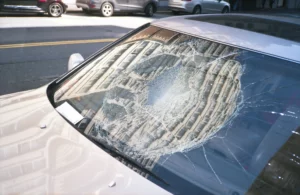
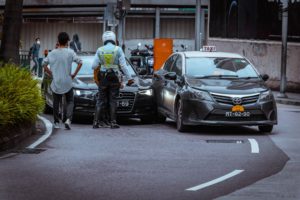
Parking lot accidents are often dismissed as minor because they usually happen at lower speeds than highway crashes. But for many injured people, a parking lot collision can create real problems: vehicle damage, neck pain, back pain, medical bills, missed work, insurance disputes, and confusion about who was actually at fault.
Fault in a parking lot accident usually depends on how the crash happened, which vehicle was moving, who had the right-of-way, whether a driver was backing out, whether a pedestrian was involved, and what evidence exists to prove the sequence of events. Because parking lots have tight spaces, unclear traffic flow, pedestrians, shopping carts, parked vehicles, and drivers moving in different directions, these claims can become more complicated than they first appear.
If you were injured in a parking lot accident and are unsure what to do next, you can request a free case evaluation to better understand your options.
Why Parking Lot Accidents Are More Complicated Than They Look
Parking lots are different from regular roads. On a street or highway, lanes, traffic lights, stop signs, and right-of-way rules are usually more obvious. In a parking lot, drivers may be pulling into spaces, backing out, stopping suddenly, turning through tight lanes, looking for open spots, or watching for pedestrians instead of nearby vehicles.
Many parking lot accidents happen because one or more drivers are distracted. A driver may be checking a phone, looking at a store entrance, adjusting a GPS, watching for an open space, or trying to reverse while visibility is blocked by larger vehicles. These details matter because insurance companies often disagree about who had the duty to yield and whether both drivers share blame.
Even a low-speed parking lot crash can cause injuries. A sudden impact can lead to whiplash, neck strain, back pain, shoulder injuries, knee injuries, wrist injuries, headaches, concussions, and soft tissue damage. If symptoms appear after the crash, do not assume the accident was too minor to matter.
For broader guidance on preserving proof after a crash, review what evidence helps the most in a car accident claim.
Common Types of Parking Lot Accidents
One common situation happens when two vehicles back out at the same time. If both drivers were reversing and neither saw the other vehicle, insurance companies may argue that both drivers share fault. Evidence becomes especially important in this situation because each driver may claim the other vehicle moved first.
Another common situation happens when one vehicle backs out of a parking space and hits a vehicle traveling through the parking lane. In many cases, the driver backing out may be considered primarily responsible because a vehicle leaving a parking space generally must watch for moving traffic before entering the lane.
A third common scenario involves a moving vehicle hitting a parked car. If the parked car was legally parked, the moving driver is usually the one responsible for the damage. However, if the parked vehicle was blocking traffic, parked illegally, or creating a hazard, liability may become more complicated.
Parking lot pedestrian accidents can also be serious. Drivers must watch carefully for people walking through lots, especially near store entrances, crosswalks, shopping cart areas, and rows of parked cars. If a pedestrian is hit, the driver may be responsible, but the facts still matter. A pedestrian who suddenly runs between vehicles, ignores visible traffic, or is distracted may become part of the fault discussion.
Pedestrians injured in these crashes can review their legal options after a parking-lot accident.
Who Is Usually at Fault in a Parking Lot Accident?
There is no automatic answer. Fault depends on the facts.
A driver backing out of a space may be at fault if they failed to check carefully before reversing. A driver traveling too fast through a parking lane may be at fault if speed made the crash harder to avoid. A driver who ignores a stop sign, painted arrow, lane marking, or yield sign may be responsible if that violation caused the collision.
If one vehicle was stopped and the other was moving, the moving vehicle may carry more responsibility. If both vehicles were moving, fault may be shared. If the accident involved a pedestrian, poor lighting, missing signs, blocked visibility, or unsafe property conditions, additional parties or insurance issues may need to be reviewed.
Parking lot accident claims can also be affected by broader car accident laws, especially when fault is disputed or insurance coverage is unclear.
The key point is simple: a parking lot accident claim should be based on evidence, not assumptions.
Are Parking Lot Accidents Always 50/50?
No. Parking lot accidents are not automatically 50/50.
Insurance companies may sometimes try to split blame when both vehicles were moving or when the facts are unclear. But shared fault is not the same as automatic equal fault. A driver who backed out suddenly, ignored a stop sign, drove too fast, failed to yield, hit a parked vehicle, or failed to watch for pedestrians may be more responsible than the other person.
This is why documentation matters. Photos, video footage, witness statements, vehicle damage, parking lot layout, and insurance statements can all affect how fault is assigned. If an insurance company says the accident is 50/50 but the evidence suggests otherwise, the decision may be worth challenging.
Does Insurance Cover Parking Lot Accidents?
Insurance may cover a parking lot accident, but the specific coverage depends on who was at fault, what type of damage occurred, and what policies are available.
If another driver caused the crash, that driver’s liability insurance may apply. If fault is disputed or the other driver has no valid coverage, your own collision coverage may help with vehicle repairs, depending on your policy. If you were injured, medical payments coverage, personal injury protection, health insurance, or a bodily injury claim may become relevant depending on your state and insurance situation.
Hit-and-run parking lot accidents can create additional problems. If the other driver leaves, surveillance footage, witness statements, license plate details, and uninsured motorist coverage may become important. If you are dealing with a hit-and-run or an uninsured driver issue, review uninsured motorist accident claims for related guidance.
Evidence That Can Help Prove Fault
Evidence is often the difference between a weak parking lot claim and a stronger one. Parking lot crashes commonly involve conflicting stories. One driver may say they were stopped. Another may say both vehicles were moving. One person may claim they had already entered the lane. The other may say the vehicle reversed suddenly.
Take photos and videos of the vehicle damage, final vehicle positions, parking lines, stop signs, painted arrows, store entrances, crosswalks, lighting conditions, blocked views, and any nearby cameras. If there are witnesses, get their names and contact information before they leave.
Security camera footage can be especially valuable. Many grocery stores, shopping centers, apartment complexes, office buildings, and retail properties have cameras that may capture the crash. Footage can be deleted or overwritten quickly, so it is important to act fast. You can also read more about the role of surveillance footage in proving car accident claims.
Police reports, security reports, dashcam recordings, repair estimates, medical records, and written insurance communications can also help. Damage patterns may show whether a vehicle was backing up, turning, stopped, or traveling through the lane when impact occurred.
What to Do After a Parking Lot Accident
After a parking lot accident, first check for injuries. If anyone is hurt, call 911 or request emergency medical help. Even if the crash seems minor, do not ignore pain, stiffness, headaches, numbness, dizziness, or worsening symptoms.
Next, document the scene. Take pictures from multiple angles before vehicles are moved if it is safe to do so. Photograph the surrounding area, including parking spaces, signs, lane markings, nearby businesses, lighting, and any obstruction that may have affected visibility.
Exchange information with the other driver, including name, phone number, insurance details, license plate number, and driver’s license information. If the accident happened near a business, ask whether a manager, security guard, or property owner can create an incident report.
Avoid admitting fault. A simple apology can later be repeated as if it were a legal admission. Stick to the facts when speaking with the other driver, police, security, or insurance companies. If you do not know exactly what happened, do not guess.
Get medical attention if you have pain or symptoms. Delayed treatment can make recovery harder and may give the insurance company an argument that your injury was not connected to the accident. If medical bills become a concern, review who pays medical bills after a car accident.
What Compensation May Be Available After a Parking Lot Accident?
A parking lot accident claim may include several types of losses. These may include emergency care, doctor visits, physical therapy, imaging, medication, future medical treatment, vehicle repairs, rental car expenses, lost wages, reduced earning ability, pain and suffering, and other accident-related damages.
The value of the claim depends on the seriousness of the injury, the evidence of fault, the available insurance coverage, the quality of medical documentation, and how the accident affects your daily life. A claim involving a minor scrape on a bumper will be evaluated differently from a claim involving ongoing neck pain, back injury, concussion symptoms, missed work, or a pedestrian injury.
If an insurance company offers a quick settlement before the full injury picture is clear, be careful. Early offers may not account for future treatment, lingering symptoms, or complications that appear days or weeks later. For related guidance, see the hidden dangers of quick insurance settlements.
When a Parking Lot Accident Claim Becomes Disputed
Parking lot claims often become disputed when both drivers blame each other, when no police report exists, when the crash happened on private property, when surveillance footage is unavailable, or when the insurance company argues that the impact was too minor to cause injury.
The insurer may also claim that your pain came from a pre-existing condition, that your medical treatment was unnecessary, or that you waited too long to see a doctor. This is why clear records matter. Keep every bill, report, photograph, email, repair estimate, prescription, and note related to the accident.
A simple claim can become more technical if the crash involved a pedestrian, delivery driver, rideshare vehicle, commercial vehicle, poor lighting, missing signage, unsafe property design, or a hit-and-run driver. If your claim feels confusing or the insurance company is pushing back, requesting a free case evaluation can help you understand what steps may be available.
Should You Request a Free Case Evaluation?
You should consider a free case evaluation if you were injured, if fault is disputed, if the insurance company says you were partly responsible, if the other driver fled, if medical bills are building up, or if the settlement offer seems too low.
You may also want help if the crash happened near a business, apartment complex, office building, grocery store, shopping center, school, or other property where surveillance footage or property conditions may matter.
A parking lot accident may look simple at first, but the claim can become more complicated once injuries, insurance coverage, disputed fault, and missing evidence are involved.
Conclusion
Parking lot accident claims should not be dismissed just because the crash happened at low speed. These accidents can cause real injuries, disputed liability, property damage, insurance stress, and financial pressure.
The strongest claims are built with clear evidence: photos, video, witness details, reports, medical records, repair estimates, and careful documentation. If you were injured or the insurance company is blaming you unfairly, do not assume you have to handle the situation alone.
Request a free case evaluation to better understand your next step after a parking lot accident.
FAQ Section
Are parking lot accidents always 50/50?
No. Parking lot accidents are not automatically 50/50. Fault depends on who was moving, who had the right-of-way, whether anyone was backing out, whether traffic signs or lane markings were ignored, and what evidence supports each version of events.
Who is at fault if someone backs into me in a parking lot?
A driver backing out of a parking space may be at fault if they failed to check for moving traffic before reversing. However, fault can depend on speed, visibility, lane markings, vehicle movement, and whether both drivers were acting carefully.
Does insurance cover parking lot accidents?
Insurance may cover parking lot accidents depending on the policy and facts. Liability insurance, collision coverage, medical payments coverage, personal injury protection, or uninsured motorist coverage may apply depending on who caused the crash and what damages occurred.
Can I file an injury claim after a low-speed parking lot accident?
Yes, a low-speed accident may still cause injuries such as whiplash, back pain, shoulder injuries, headaches, or soft tissue damage. Medical documentation is important because insurance companies may argue that a low-speed crash could not have caused serious harm.
What evidence helps prove fault in a parking lot accident?
Helpful evidence may include photos, videos, witness statements, surveillance footage, dashcam recordings, police reports, security reports, repair estimates, medical records, and pictures of signs, parking lines, lighting, and vehicle damage.
What if the other driver will not admit fault?
If the other driver will not admit fault, evidence becomes especially important. Insurance companies may review statements, damage patterns, photos, video footage, witness accounts, and reports to decide how fault should be assigned.