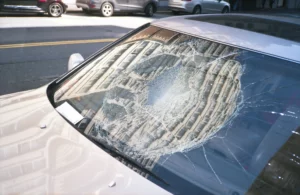
After a car accident, medical bills can start arriving quickly. Emergency care, ambulance transport, imaging, follow-up appointments, physical therapy, prescriptions, and specialist visits can create financial stress long before an injury claim is resolved.
One of the most common questions after a crash is simple: who pays medical bills after a car accident?
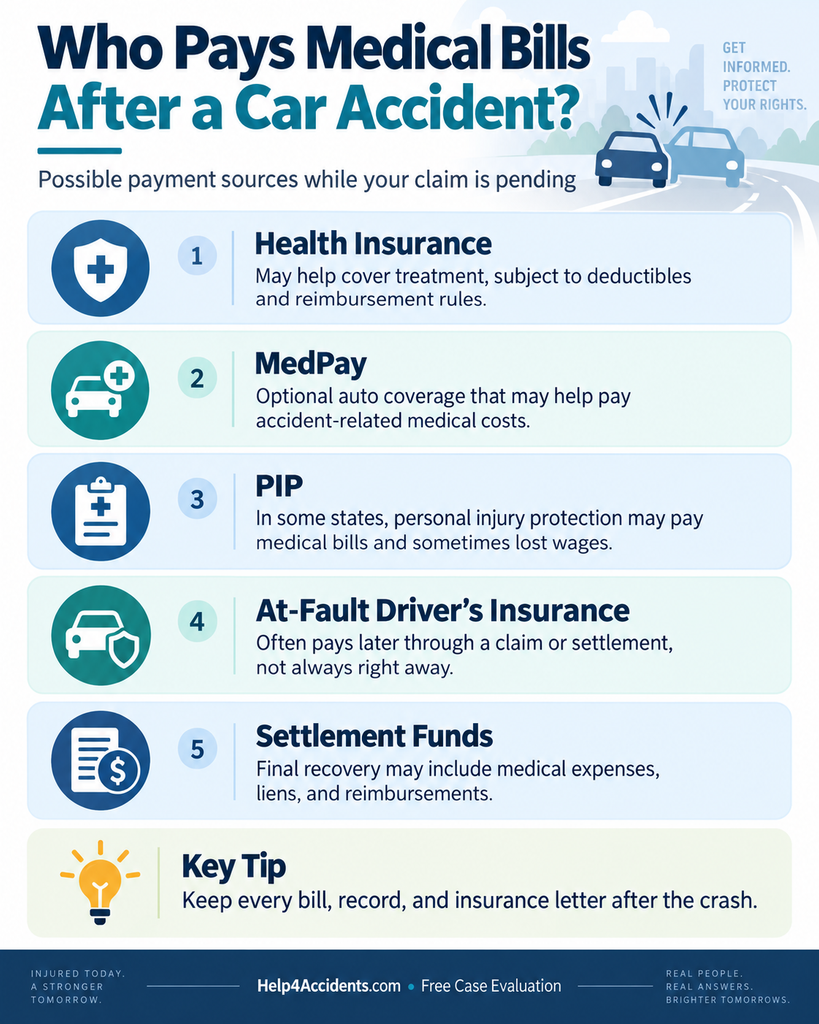
The answer depends on the state, insurance coverage, fault, health insurance, medical payment coverage, personal injury protection, and whether a settlement is eventually reached. In many cases, medical bills are not automatically paid by the at-fault driver right away. Instead, several sources may be involved while the claim is pending.
If you were injured and are unsure how medical bills may affect your claim, you can request a free case evaluation to better understand your next step.
Medical Bills Can Arrive Before the Claim Is Settled
A car accident injury claim can take weeks, months, or longer to resolve. Medical providers, however, usually do not wait until the settlement is complete. They may bill you, your health insurance, your auto insurance, or another available coverage source.
This is why many accident victims feel stuck. They may know another driver caused the crash, but the other driver’s insurance company may not pay medical bills immediately. The insurer may first investigate fault, review medical records, question treatment, or wait until the full claim is ready to settle.
That delay does not mean you should avoid treatment. Medical care protects your health and creates records that connect your injuries to the crash. Delaying care can make recovery harder and may give the insurance company an argument that your injuries were not serious.
For broader claim guidance, review personal injury claim after an accident.
Does the At-Fault Driver Pay Medical Bills Right Away?
Usually, the at-fault driver does not personally pay your medical bills as they arrive. In most injury claims, the at-fault driver’s insurance company may eventually pay compensation through a settlement or claim resolution.
That settlement may include medical expenses, lost wages, pain and suffering, future treatment, and other losses. But the payment often comes later, not while each medical bill is being issued.
This is one reason accident victims need to keep careful records. Save every bill, explanation of benefits, receipt, treatment note, prescription, imaging report, and insurance letter. These records help show the financial impact of the crash.
If the insurance company makes an early offer before your treatment is complete, be careful. Review car accident settlement amounts before assuming the offer is fair.
Can Health Insurance Pay Accident-Related Medical Bills?
Health insurance may help pay for medical care after a car accident, depending on the policy and provider rules. You may still be responsible for deductibles, copays, coinsurance, out-of-network charges, or uncovered treatment.
Using health insurance can help prevent bills from going unpaid while the accident claim is pending. However, health insurance companies may later seek repayment from a settlement through a process often called reimbursement or subrogation.
That does not mean you should avoid using health insurance. It means you should keep records and understand that settlement funds may need to account for medical bills that were paid by another source.
For related settlement issues, review how subrogation impacts a car accident settlement.
What Is MedPay or Medical Payments Coverage?
Medical payments coverage, often called MedPay, is optional auto insurance coverage in many states. It may help pay accident-related medical bills regardless of who caused the crash, up to the policy limit.
MedPay may cover ambulance bills, emergency treatment, doctor visits, X-rays, physical therapy, and other eligible medical expenses. The exact benefits depend on the policy.
This coverage can be useful because it may provide faster help with medical bills while the fault claim is still pending. However, MedPay limits are often smaller than the full value of a serious injury claim.
What Is Personal Injury Protection?
Personal injury protection, often called PIP, may apply in some states and policies. PIP can help pay certain accident-related expenses, which may include medical bills and sometimes lost wages or other costs.
PIP rules vary significantly by state. In some no-fault states, injured people may first turn to their own PIP coverage after a crash, regardless of who caused the accident. In other states, PIP may be optional or may work differently.
Because insurance rules vary, do not assume your claim works the same way as someone else’s. For a broader explanation, review understanding no-fault insurance.
What If You Do Not Have Health Insurance?
If you do not have health insurance, medical bills after a car accident can feel overwhelming. You may still have options, but they depend on your location, the medical provider, available auto insurance coverage, and the facts of the claim.
Some providers may offer payment plans. Some may agree to treat accident victims while payment is delayed. Some claims may involve medical liens or letters of protection, where a provider agrees to wait for payment from a future settlement.
Do not ignore medical symptoms because you are worried about cost. Untreated injuries can worsen, and lack of medical documentation can weaken the claim.
A free case evaluation can help you understand what options may be available after an accident.
Medical Bills While Waiting for a Settlement
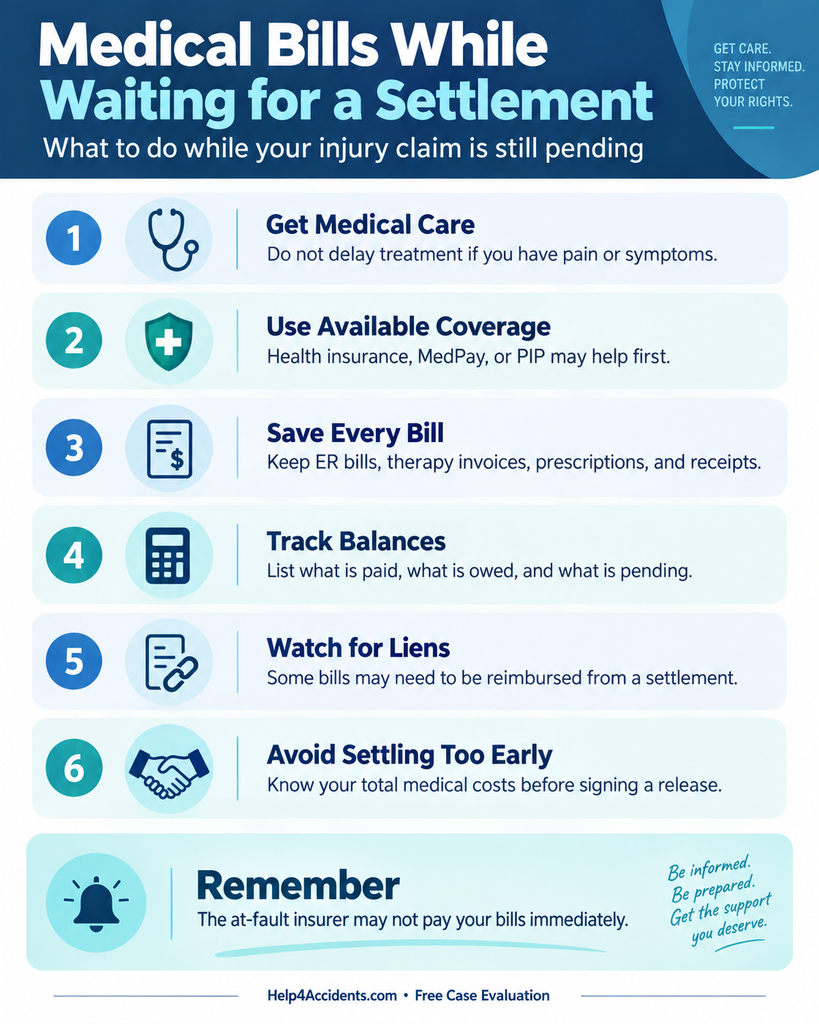
Many people ask what happens to medical bills while waiting for a settlement. The answer depends on who is billing, what insurance is available, and whether providers are willing to wait.
Some bills may go through health insurance. Some may be submitted to MedPay or PIP. Some may remain outstanding. Some may be negotiated later. Others may become part of the settlement demand.
The key is to stay organized. Keep a list of every provider, bill amount, payment made, insurance adjustment, remaining balance, and collection notice. Do not throw away paperwork just because it looks repetitive.
If a bill is sent to collections, respond carefully and keep documentation. Collection activity does not always mean the injury claim is lost, but it can create additional stress and should not be ignored.
Can Medical Bills Be Negotiated After an Accident?
Medical bills may sometimes be negotiated, especially when there are outstanding balances, liens, or settlement-related payments. Negotiation depends on the provider, insurer, health plan, state rules, and claim facts.
Do not assume every bill is final. It may be possible to ask for an itemized bill, confirm insurance adjustments, check for duplicate charges, dispute incorrect codes, request a payment plan, or ask whether a reduced amount is available.
However, be careful about signing forms or settlement releases without understanding how medical bills will be paid. A settlement that looks good on paper may leave less money than expected if liens, unpaid bills, or reimbursement claims are not accounted for.
What If the Other Driver Has No Insurance?
If the at-fault driver has no insurance or not enough insurance, your own coverage may become important. Uninsured motorist coverage, underinsured motorist coverage, MedPay, PIP, health insurance, or other coverage may help depending on your policy and state.
Uninsured-driver cases can be more complicated because there may not be enough coverage to pay all losses. Medical bills, wage loss, and pain and suffering may need to be evaluated carefully.
For more detail, review uninsured motorist accident claims.
What Medical Records Should You Keep?
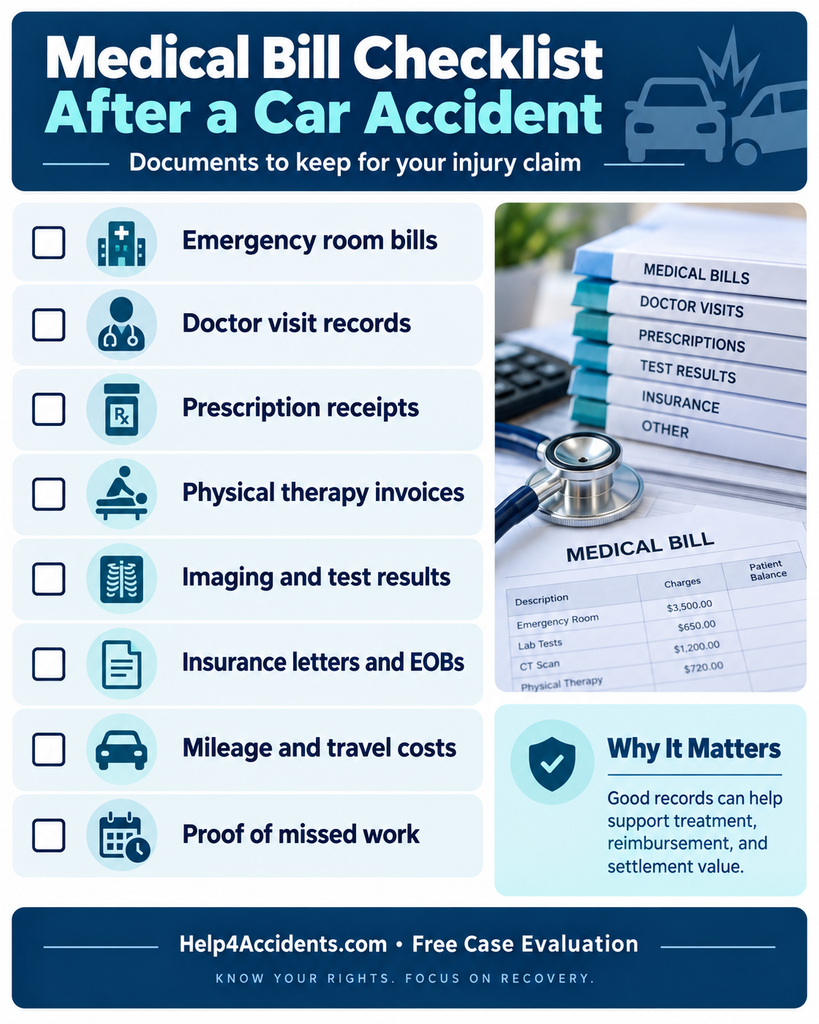
Strong medical documentation can help protect your claim. Keep copies of emergency room records, ambulance bills, urgent care records, doctor notes, physical therapy records, imaging results, prescriptions, referrals, specialist reports, work restrictions, discharge papers, and itemized bills.
Also keep records of mileage to appointments, out-of-pocket costs, missed work, and symptoms that affect your daily life.
A simple folder can help. Separate the documents into medical bills, insurance letters, treatment records, prescriptions, wage loss, and settlement communications.
If you receive confusing paperwork from an insurance company or medical provider, save it. It may become important later.
Mistakes That Can Hurt a Medical Bills Claim
Several mistakes can make medical-bill issues harder after an accident.
Do not delay medical care if you have symptoms. Do not miss follow-up appointments without explanation. Do not ignore bills or collection notices. Do not assume the at-fault driver’s insurance will automatically pay each bill right away. Do not accept a quick settlement before you understand your medical costs.
Also avoid giving broad medical authorizations to the insurance company without knowing what they allow. Insurers may look through past medical history and try to blame your symptoms on a pre-existing condition.
For more claim-protection guidance, read common mistakes to avoid when filing a personal injury claim.
When to Request a Free Case Evaluation
You should consider a free case evaluation if medical bills are piling up, you do not know which insurance should pay, the at-fault driver’s insurer is delaying, you do not have health insurance, a provider is sending bills to collections, or you received a settlement offer before treatment is complete.
You may also want help if you have serious injuries, ongoing therapy, missed work, disputed fault, uninsured-driver issues, or questions about liens and reimbursement.
Medical bills can affect both your immediate finances and the final value of your claim. Before accepting a settlement, make sure you understand what bills are paid, what bills remain, and what amounts may need to be reimbursed.
Start here: Get a Free Case Evaluation.
Conclusion
Medical bills after a car accident can be confusing because the person who caused the crash may not pay them immediately. Health insurance, MedPay, PIP, auto insurance, liens, provider billing, and settlement negotiations may all play a role.
The best step is to get medical care, keep every bill and record, understand your insurance coverage, avoid quick settlement mistakes, and document how the injury affects your life.
If you were injured and are unsure who may pay your medical bills after a car accident, request a free case evaluation to better understand your next step.
FAQ Section
Who pays medical bills after a car accident?
Medical bills may be paid by health insurance, MedPay, PIP, the at-fault driver’s insurance through a settlement, or another available coverage source. The answer depends on fault, insurance coverage, state rules, and the facts of the claim.
Does the at-fault driver’s insurance pay medical bills immediately?
Usually not immediately. The at-fault driver’s insurance company may investigate liability, review medical records, and negotiate a settlement before paying injury-related compensation.
Can I use my health insurance after a car accident?
Yes, health insurance may help pay accident-related medical bills depending on your policy. However, the health insurer may later seek reimbursement from a settlement.
What if I cannot afford medical treatment after a crash?
You may have options such as health insurance, MedPay, PIP, payment plans, medical liens, or providers willing to wait for payment. A free case evaluation can help you understand what may be available.
Can medical bills be negotiated after a car accident?
Sometimes. Medical bills, liens, or balances may be reviewed or negotiated depending on the provider, insurer, health plan, state rules, and settlement situation.
Should I settle before all medical bills are known?
Be careful. Settling too early may leave you responsible for future treatment, unpaid bills, or reimbursement claims. Make sure you understand the full medical picture before signing a release.
👉 Get a Free Case Evaluation
https://help4accidents.com/get-a-free-case-evaluation-page/